
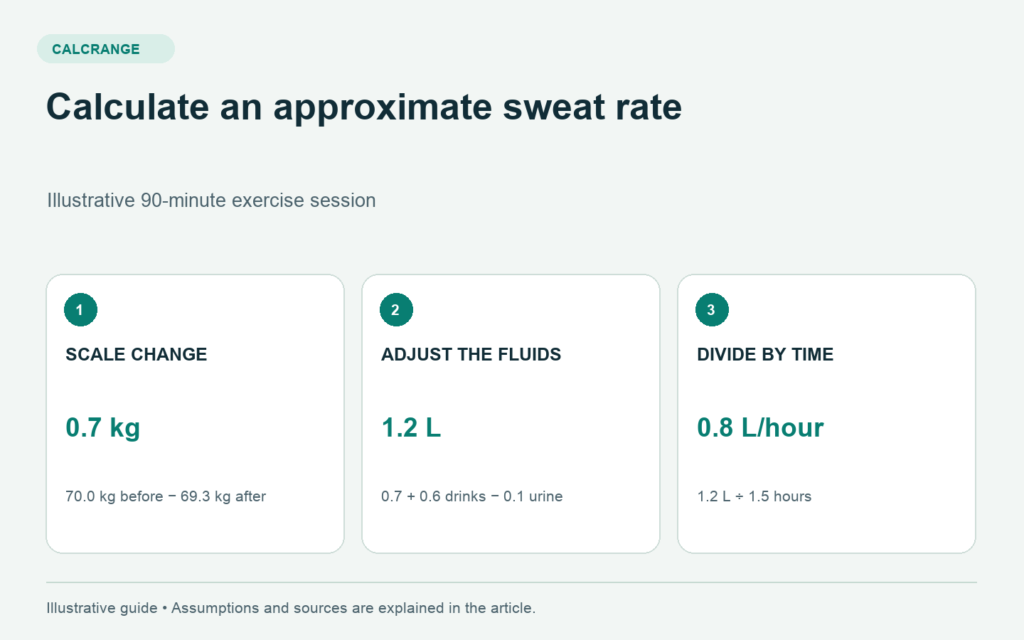
How to Calculate Sweat Rate: A Practical Exercise Example
A sweat-rate estimate can explain fluid loss in a specific session. See a worked calculation and why the answer is not a universal drinking target.
Learn what common health and fitness estimates measure, how their formulas work, and where their limits matter. Start with the BMR calculator, protein requirement calculator, or BMI calculator. These tools support general understanding and do not diagnose conditions or replace individual clinical advice.
A sweat-rate estimate can explain fluid loss in a specific session. See a worked calculation and why the answer is not a universal drinking target.
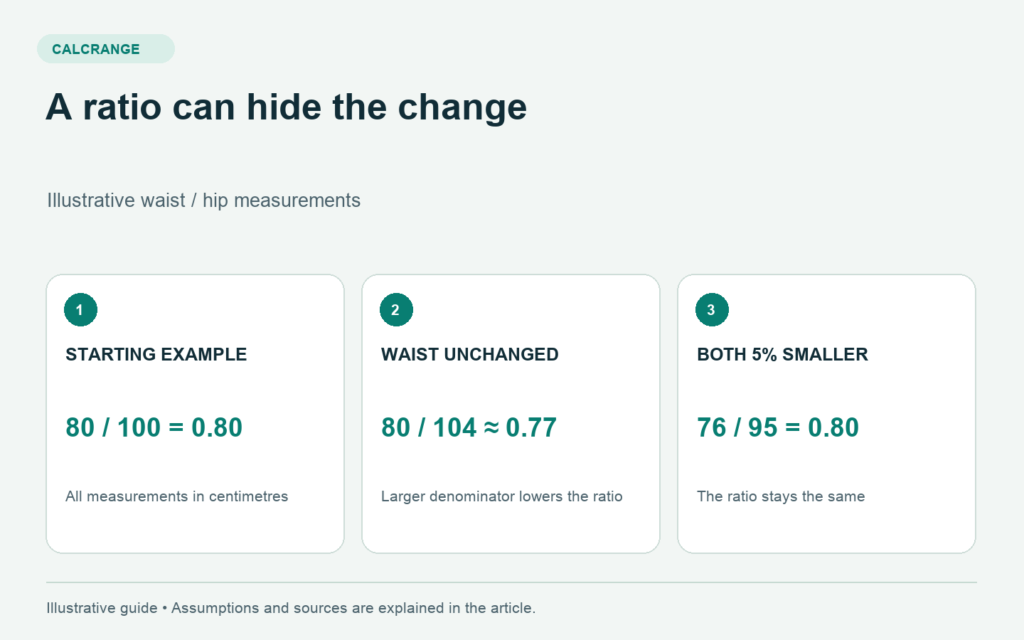
A ratio can fall because the waist gets smaller or because the hips get larger. Keep both measurements to understand what changed.
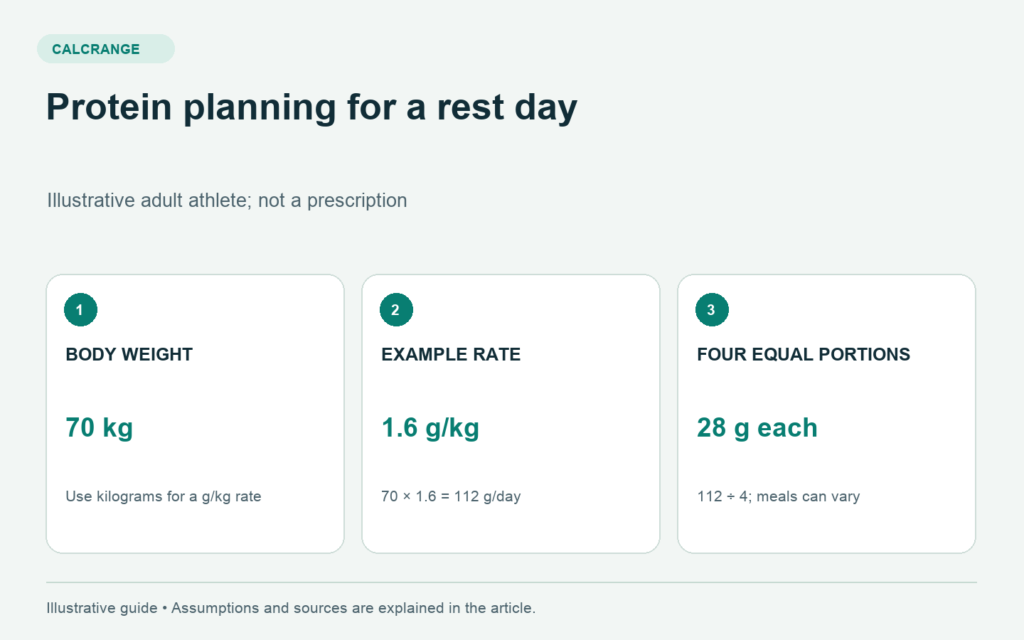
A day away from training can still be part of recovery. Use a daily protein calculation and meal arithmetic rather than resetting intake to zero.
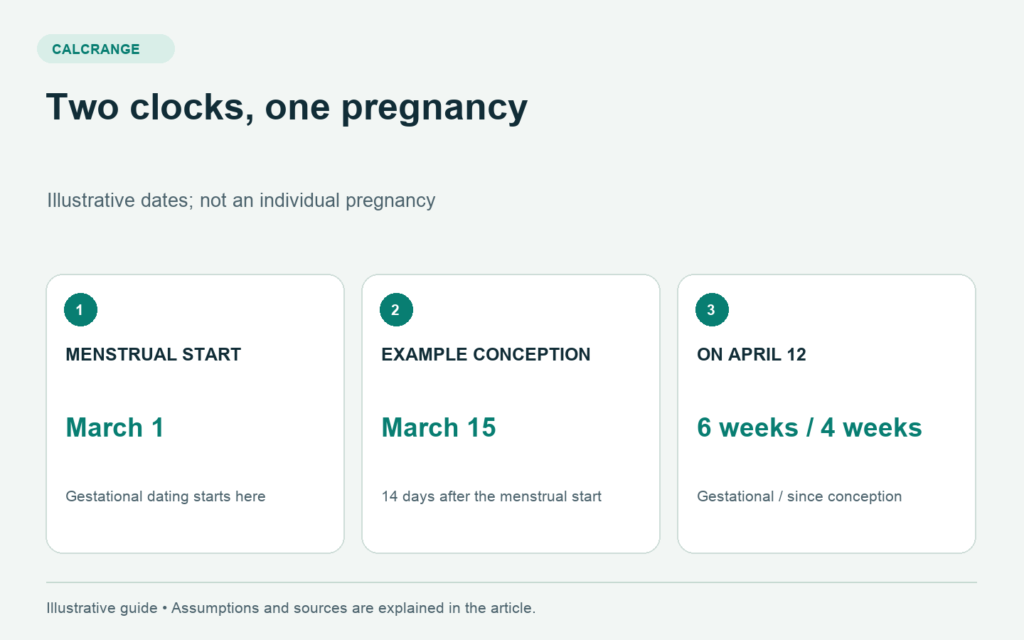
Pregnancy weeks usually use a menstrual dating convention. Time since conception uses a different starting point, so the numbers can differ.
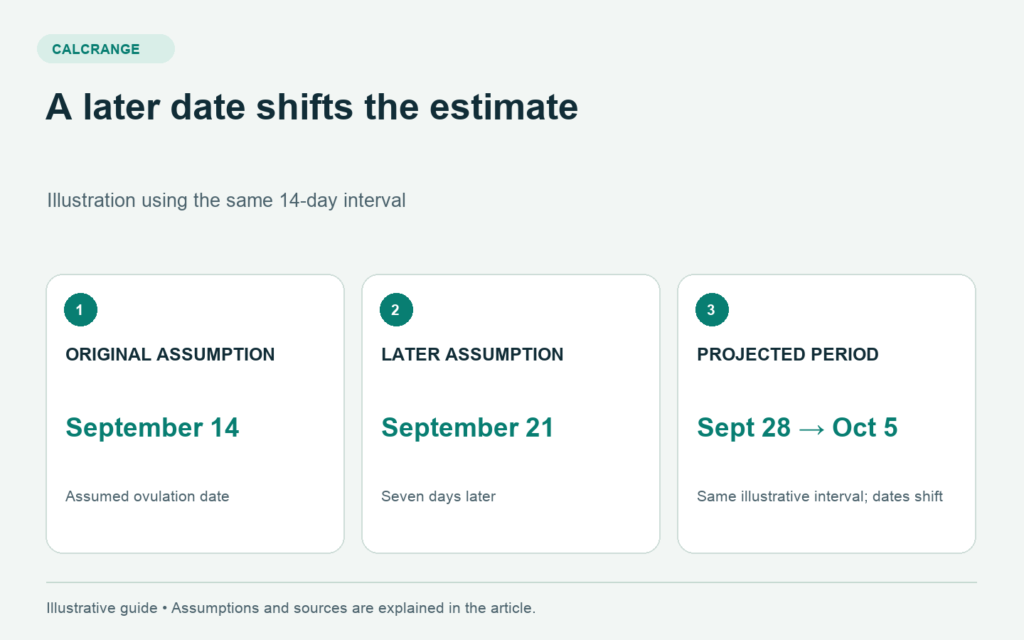
A period prediction depends on assumptions about ovulation. A later event can move the timeline, but a calculator cannot confirm it happened.
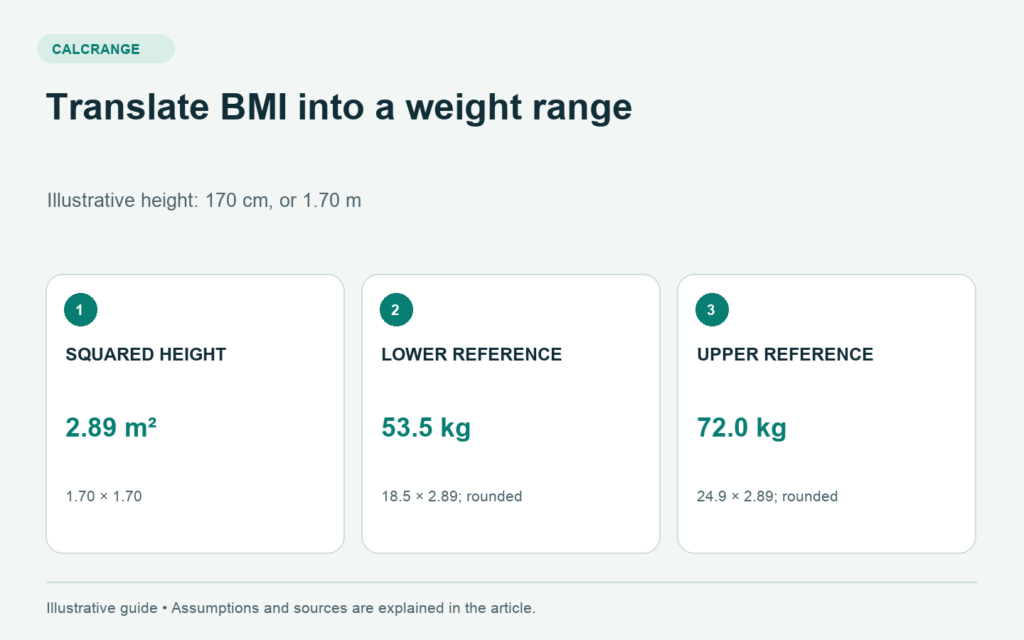
A calculator can display a formula estimate and a BMI reference range. They answer different questions and neither sets an individual goal alone.
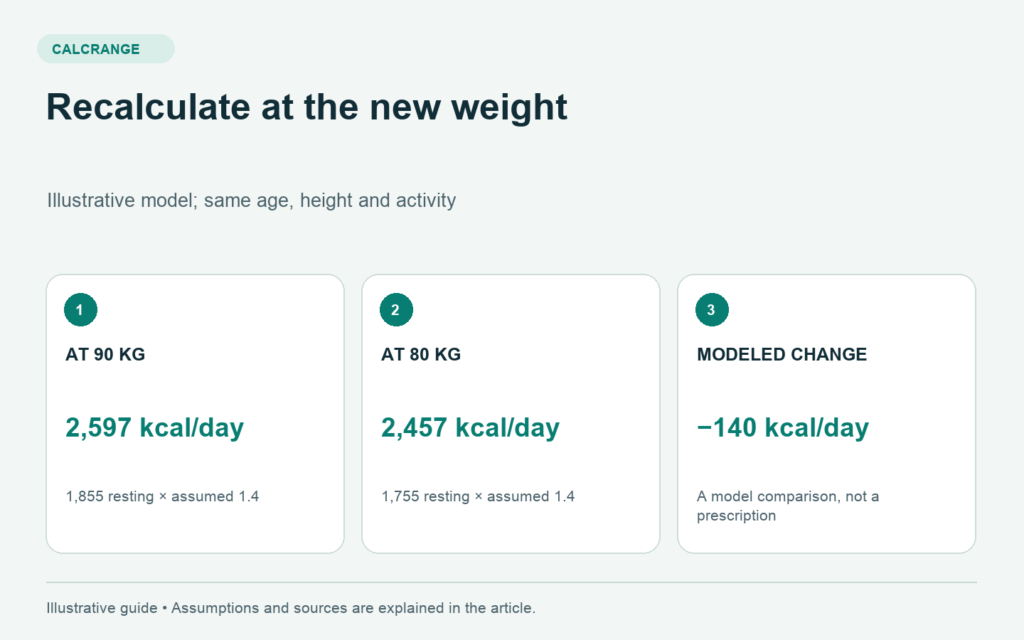
Your previous calorie estimate may no longer describe your current body size or activity. Compare assumptions before changing your plan.
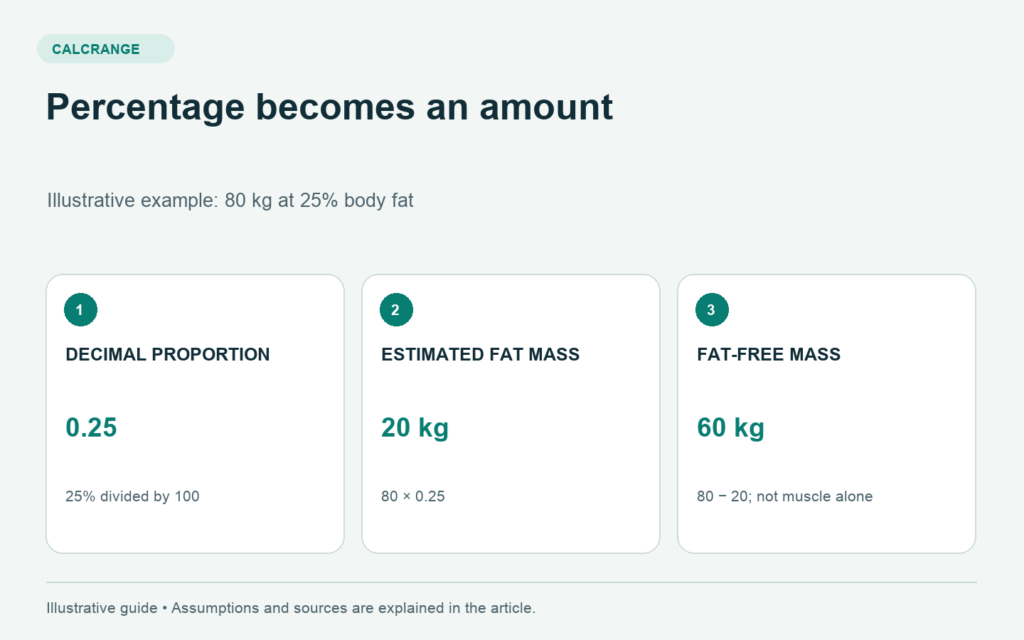
The same body fat percentage can represent different amounts of fat. Use weight and percentage together to understand the arithmetic.
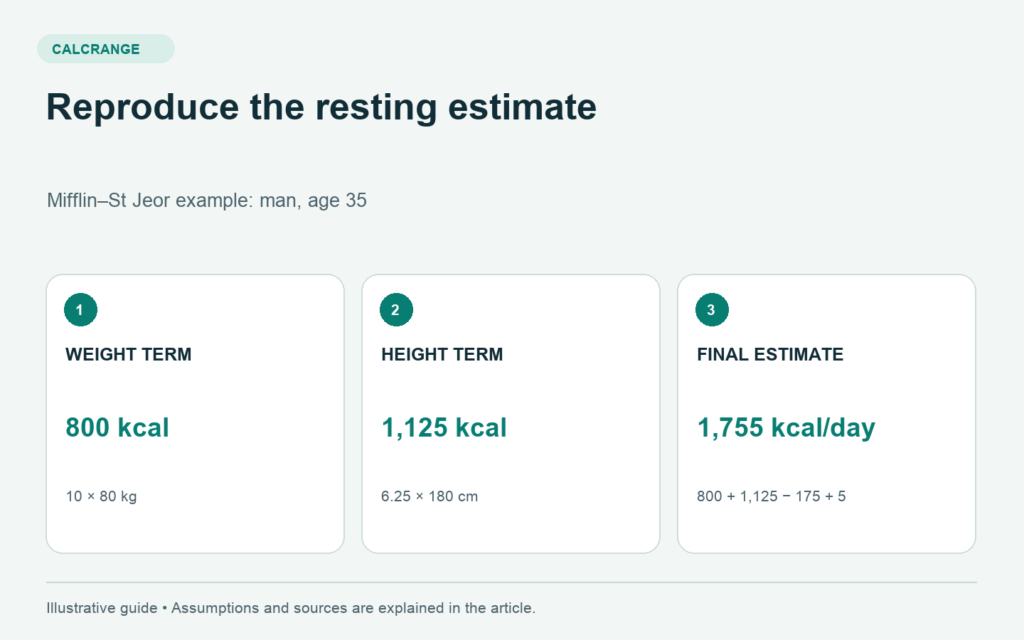
A resting-calorie estimate can be mathematically correct while differing from measured expenditure. Learn how to compare results fairly.
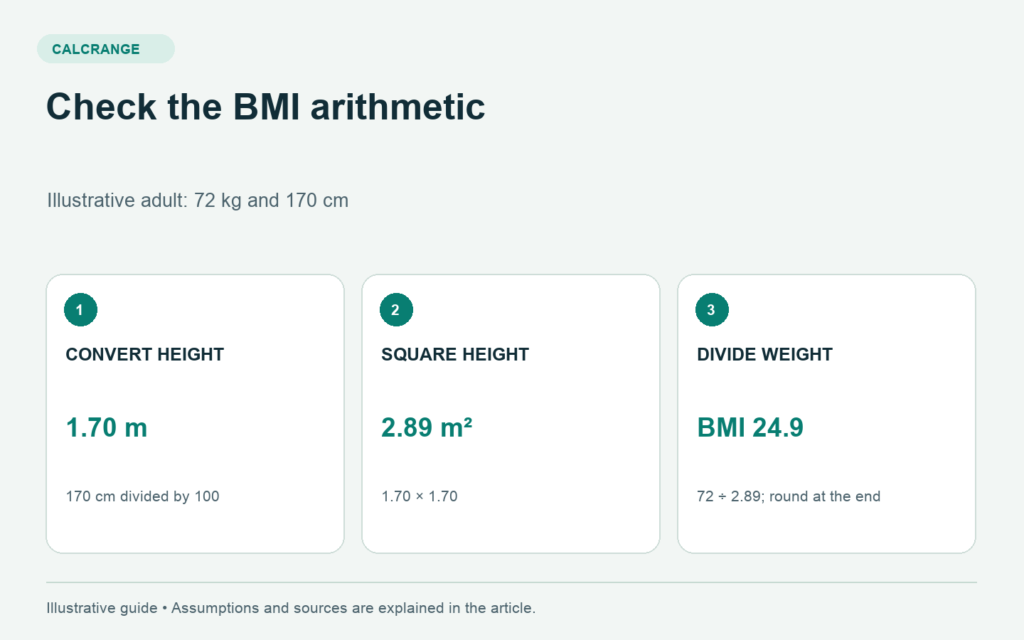
Before interpreting a BMI result, verify the units and height entry. Small input differences can matter more than extra decimal places.