
Concrete Calculator: A Comprehensive Guide
Choose the shape of the pour, then enter its dimensions. This calculator estimates wet-concrete volume, packaged-mix bags and material cost. Check the units beside each field: in imperial mode, slab length and width use feet while thickness uses inches.
Concrete Calculator
Work out the concrete volume for slabs, footings, columns, walls and tubes — in cubic yards, cubic metres and cubic feet — plus the pre-mix bags to buy, waste allowance and total cost.
Breakdown
💡 Tips
Disclaimer: An estimate only. Bag yields vary by brand and mix, and site conditions, spillage and uneven sub-base all affect real usage. Order a little extra — running short mid-pour is far costlier than a spare bag. Confirm quantities with your supplier.
Start with the measured size of the space to be filled. A calculator cannot account for an uneven excavation unless you include that extra depth or adjust the waste allowance.
The worked example below shows how volume becomes an order quantity. The result is a materials estimate; it does not determine structural thickness, reinforcement, concrete strength or whether a design meets local requirements.
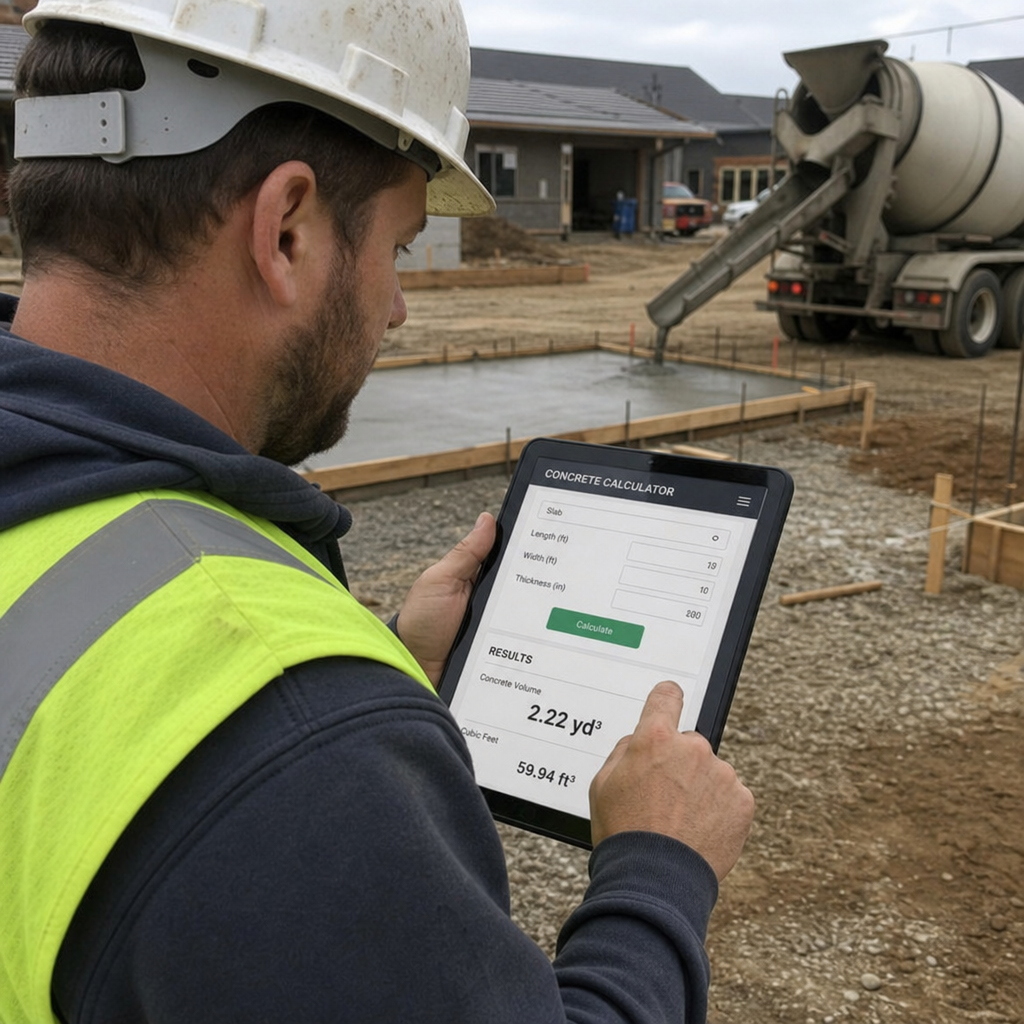
The Basics of Concrete Calculations
At its core, estimating concrete is an exercise in volume. Whether you are using a concrete volume calculator, a area calculator, or figuring it out by hand, the foundational math remains the same: Length × Width × Depth.
Convert dimensions to one length unit before multiplying them. For example, a 4-inch thickness is 4 ÷ 12 feet, not 4 feet. Divide cubic feet by 27 to obtain cubic yards.
Worked example: a 10 ft by 10 ft slab
For a 4-inch thickness, the raw volume is 10 × 10 × (4 ÷ 12) = 33.333 ft³. With the calculator’s 10% allowance, the estimate becomes 33.333 × 1.10 = 36.667 ft³, or about 1.36 yd³. At the selected 80 lb bag yield of 0.60 ft³, 36.667 ÷ 0.60 = 61.11, so round up to 62 bags. The displayed volume is rounded for reading; the bag count uses the unrounded calculation.
The 40, 60 and 80 lb choices assume yields of 0.30, 0.45 and 0.60 ft³ respectively. These match the approximate yields in QUIKRETE Concrete Mix No. 1101’s product data sheet. Other products can differ: check the bag or supplier’s data sheet before buying. The waste allowance is adjustable, not a guarantee against a shortage.
Mastering the Units of Measurement
When using a concrete volume estimator tool, you will frequently encounter different units:
- Cubic yards (yd³): One cubic yard contains 27 cubic feet. Confirm the delivery unit and minimum order with your ready-mix supplier.
- Cubic metres (m³): Multiply dimensions expressed in metres. Convert centimetres to metres first; 10 cm is 0.10 m.
- Mixed length units: Use the units shown beside the inputs. Square feet measure area; cubic feet measure volume, so slab thickness is also required.
Many beginners wonder: how many square feet per yard of concrete? The answer depends on your slab thickness. One cubic yard covers 81 square feet at a 4-inch depth, but only 54 square feet at a 6-inch depth.
Concrete Projects by Type: Which Calculator Do You Need?
Choose the shape that matches the actual space. For a project with several separate sections, calculate each section and add their volumes; avoid counting overlapping sections twice.
Slabs, Floors, and Driveways
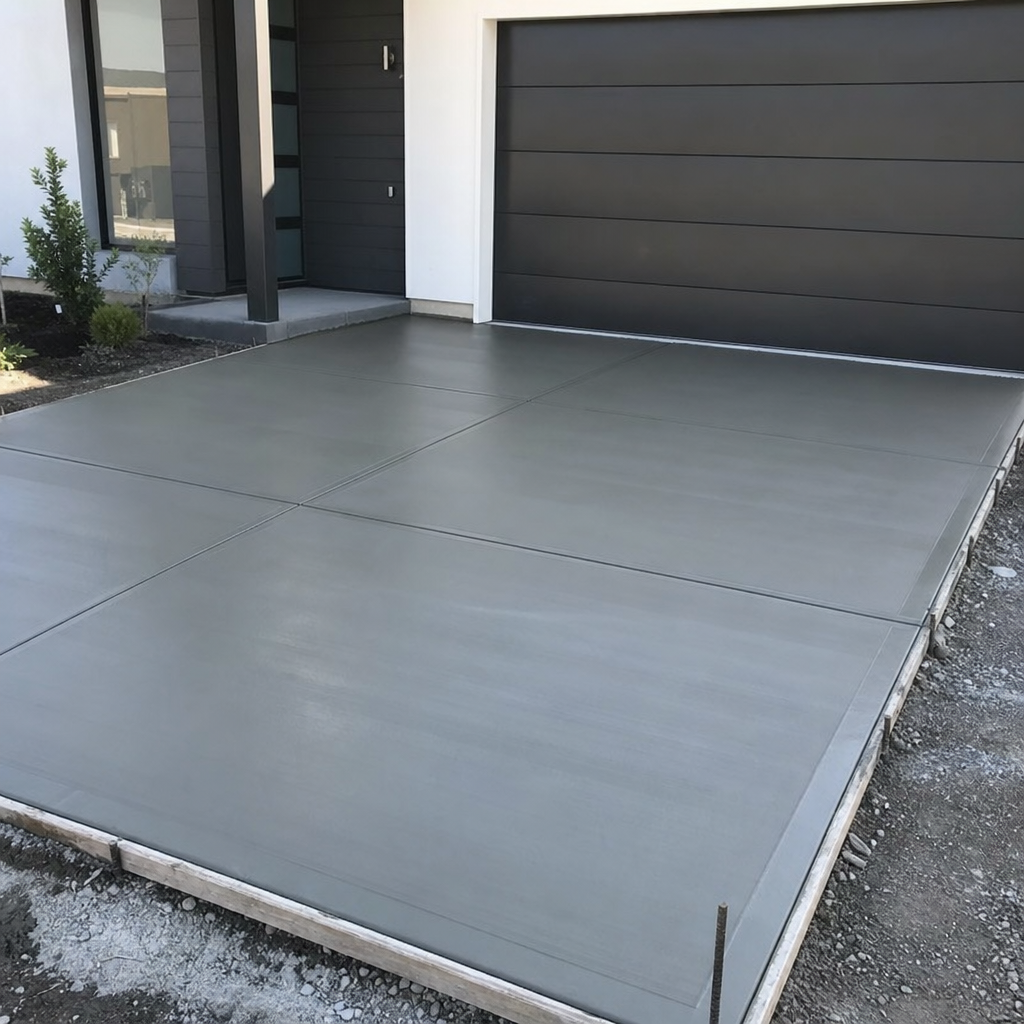
Flatwork is the most common residential concrete job. Tools like a concrete slab calculator or a concrete floor calculator are perfect for these tasks.
- Driveways: A concrete driveway calculator will help you account for the slope and heavy-load thickness required. To budget effectively, use a concrete driveway cost calculator alongside a driveway concrete estimator.
- Patios & Garages: If you’re building an outdoor living space, a patio concrete estimator (or concrete patio calculator) is ideal. When figuring out cubic yards for patio estimation, remember to check the standard concrete slab thickness requirements—usually 4 inches for foot traffic and 6 inches for vehicles, which applies heavily when using a garage slab calculator or a shed slab calculator.
- Basements & Interiors: A basement concrete calculator ensures you account for the large footprint and vapor barriers required for indoor living spaces. For quick surface area checks, use a concrete square foot calculator or a concrete square meter calculator.
Foundations, Footings, and Walls
Structural integrity starts below the ground.
- Footings: Before walls go up, footings must be poured. A concrete footing calculator or footing concrete estimator is vital. If you aren’t sure how to measure footing volume, simply measure the trench’s width, total length, and depth.
- Foundations: A comprehensive concrete foundation calculator (or foundation concrete estimator) handles the complex geometry of a home’s base. Because these require immense volume, utilizing a concrete foundation cost calculator is crucial for budgeting.
- Walls: Whether pouring a basement wall or a landscape feature, a concrete wall calculator or a specific concrete retaining wall calculator will calculate vertical volume. Estimating material for concrete retaining walls also requires factoring in drainage and reinforcement.
Posts, Pillars, and Sonotubes
When setting fences or building decks, your math shifts from rectangles to cylinders.
- Post Holes: Use a concrete hole calculator, post hole concrete calculator, or concrete post calculator to figure out the exact amount of concrete for fence posts. A specialized concrete calculator fence post tool will tell you how many bags you need per hole.
- Pillars & Piers: For structural supports, a concrete pier calculator or concrete column calculator is used. If you are using cardboard forming tubes, a concrete sonotube calculator is indispensable. A reliable sonotube concrete requirements guide will utilize the circular concrete pillar volume formula: Volume = π × radius² × height.
Stairs and Steps
Estimating concrete for stairs and steps is notoriously tricky because of the jagged geometry. A concrete stairs calculator breaks the process down by multiplying the tread depth, riser height, width, and number of steps, saving you from a complex geometry headache.
Estimating Materials: Bags vs. Ready Mix
Once you know your volume, you must decide how to source your concrete. A comprehensive concrete material estimator or concrete material calculator will help you compare options.
The Bagged Concrete Route
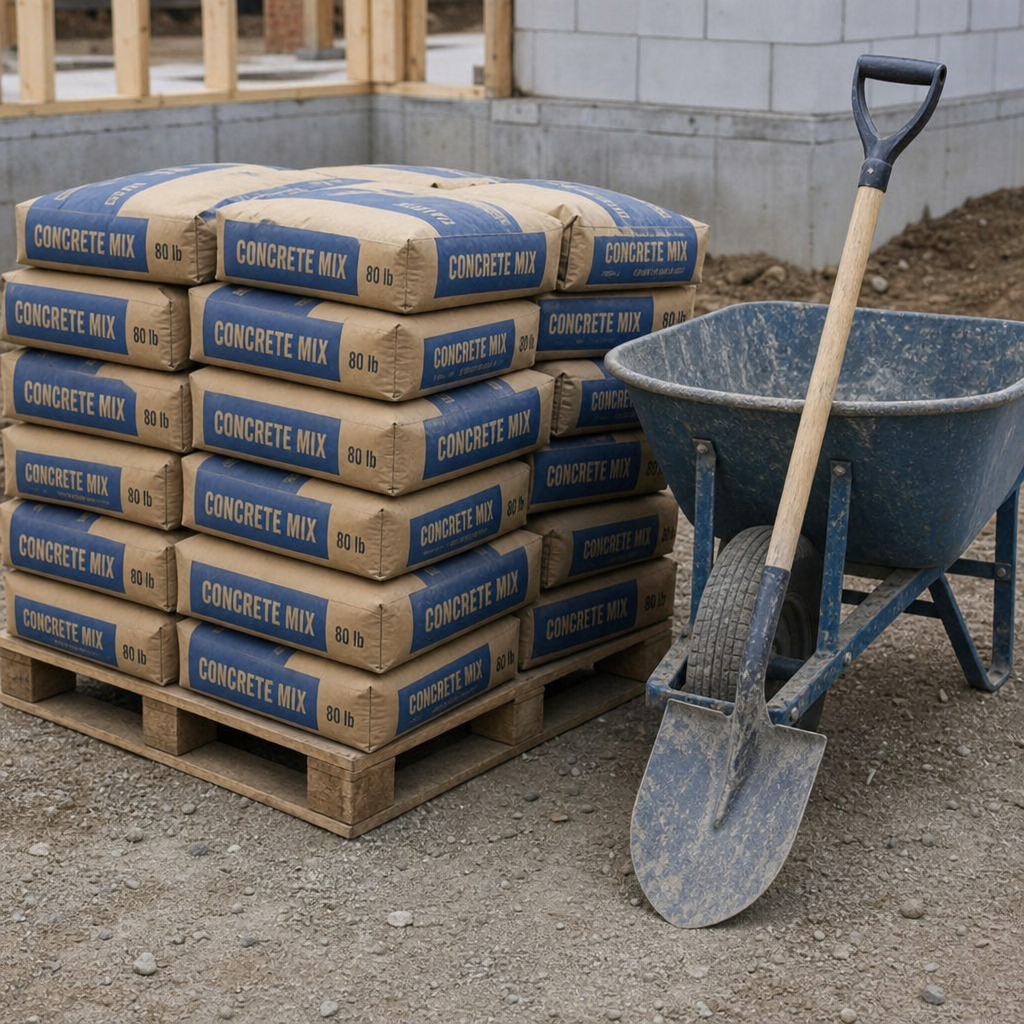
For smaller DIY projects, bagged concrete is the go-to. You will need a concrete bags calculator (or concrete bag estimator) to determine how many trips to the hardware store you’ll make.
- The 10×10 Rule: A common question is how many 80lb bags for 10×10 slab? Assuming a standard 4-inch depth, a 10×10 slab equals roughly 1.23 cubic yards. Since it takes about 45 bags (at 80 lbs each) to make one cubic yard, you would need approximately 56 bags.
- Brand Yields: When making a sakrete vs quikrete yield comparison, check the bag specifications. An 80lb bag of Quikrete yields about 0.60 cubic feet, while Sakrete yields similarly, but high-yield or fast-setting varieties may differ. A cement bags calculator handles these minor discrepancies.
The Ready Mix Route
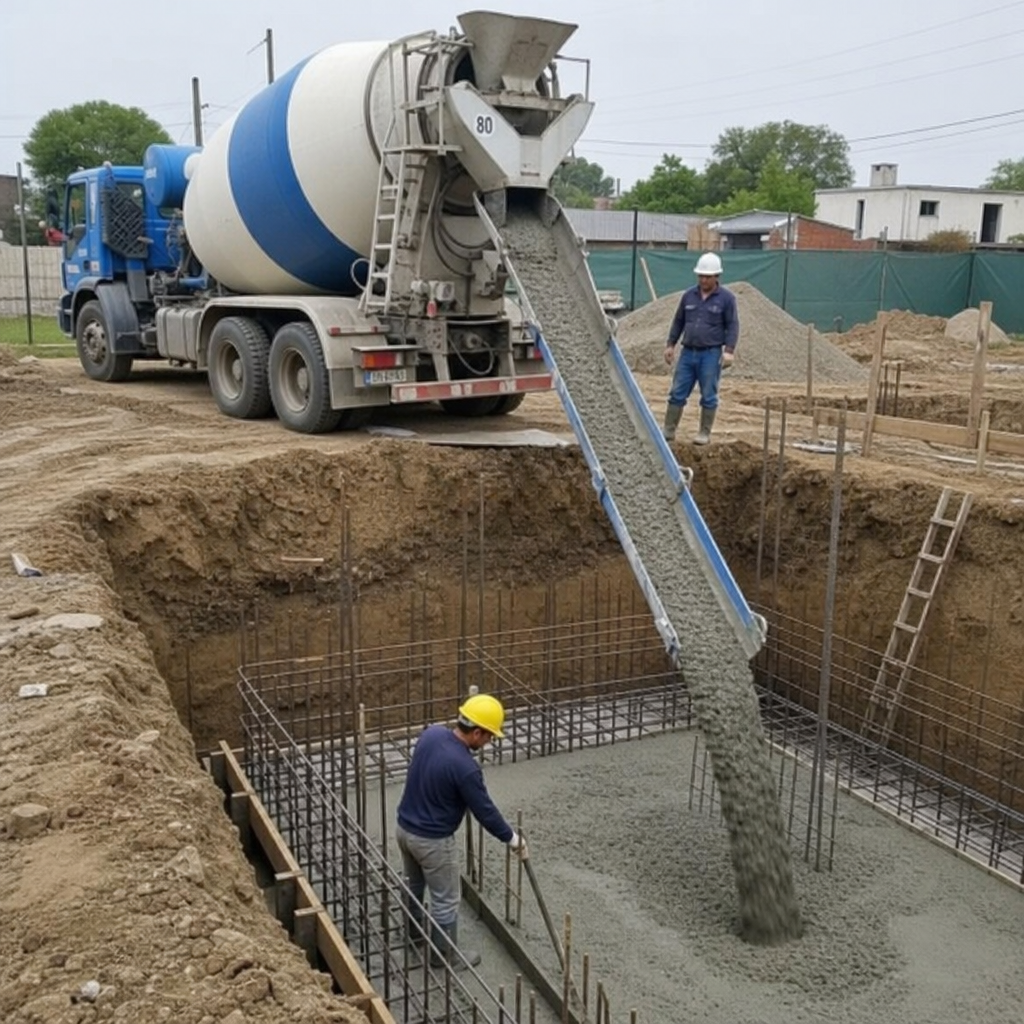
For anything over a cubic yard, ready mix delivered by a truck is superior.
- Use a ready mix concrete calculator or ready mix estimator to translate your cubic yards into a truck order.
- When evaluating ready mix vs bagged concrete cost, ready mix usually wins on volume, labor, and time. However, smaller orders might incur fees. Knowing avoiding short load concrete delivery fees is critical—most companies charge extra if you order less than 3 to 4 cubic yards.
Mixing Your Own: Cement, Sand, and Aggregate
If you are mixing from scratch, a standard concrete project calculator won’t cut it. You need a concrete mix calculator or a concrete mix estimator to determine the exact concrete mix ratio calculator (typically 1 part cement, 2 parts sand, 3 parts gravel).
- A cement sand aggregate calculator (or concrete aggregate calculator) ensures your structural integrity.
- You will also need a cement calculator to figure out the pure cement powder required. Tools like a cement quantity calculator or cement volume calculator are perfect for this.
Note: Don’t forget other specific mixes. A mortar calculator is needed for laying bricks, a screed calculator for floor leveling, and a concrete block calculator (or concrete block fill calculator) to determine how much grout is needed to fill the hollow cores of CMU blocks.
Factoring in Costs, Waste, and Logistics
Accurate math is only half the battle; managing the realities of a job site is the other.
Budgeting and Pricing
A concrete cost estimator takes your calculated volume and multiplies it by local material rates. To get a full financial picture:
- Use a concrete pricing calculator or a concrete slab cost calculator.
- A concrete calculator pricing tool should ideally separate the cement cost calculator metrics from labor and delivery.
- For truck deliveries, a concrete delivery calculator (often tied to a concrete truck calculator) helps estimate transport fees. A ready mix cost calculator is arguably the most essential financial tool for a contractor.
The Importance of a Waste Factor
Concrete projects rarely go exactly to plan. Subgrades aren’t perfectly flat, forms bulge, and spills happen. Using a concrete waste calculator or ensuring your tool is a concrete calculator with waste factor is vital.
- What is a standard concrete waste factor percentage? Generally, add 5% to 10% to your total volume. For uneven trench footings, lean closer to 10%.
Logistics of the Pour
When the truck arrives, a concrete pour calculator helps manage the timing and manpower needed. Additionally, understanding the weight of your pour is crucial if you are pumping or craning materials. A concrete weight calculator or concrete density calculator will tell you that a cubic yard of standard concrete weighs roughly 4,000 lbs!
Advanced Considerations: Reinforcement and Curing
For heavy-duty applications, a building concrete calculator or an advanced construction material calculator involves more than just wet concrete.
Rebar and Reinforcement
A concrete reinforcement calculator or reinforced concrete calculator helps determine the grid spacing and length of steel required.
- When using a rebar calculator for concrete, you might wonder about rebar displacement in concrete calculations. Does the steel take up so much space that you need less concrete? For standard residential slabs, rebar displacement is negligible (less than 1%). However, for massive commercial bridge columns, a specialized concrete quantity estimator will subtract the steel volume from the concrete volume.
Thickness and Depth
Dialing in your depth requires a precise concrete thickness calculator or concrete depth calculator. A fraction of an inch off across a large driveway can result in a massive shortage.
Curing Times
After the pour, the chemical process begins. While not a volume tool, a concrete curing calculator helps contractors estimate when the slab will reach varying PSI strengths based on ambient temperature and humidity, dictating when forms can be removed or loads applied.
How to Choose the Right Concrete Calculator
With so many tools available, which one should you use?
- For the DIYer: A home concrete calculator or concrete calculator for homeowners is usually a free concrete calculator found online. A basic concrete calculator online or concrete volume estimator is perfect for straightforward patios and fence posts.
- For the Pro: A concrete calculator for contractors goes deeper. These concrete quantity calculator tools act as a complete concrete requirement calculator, integrating rebar, waste factors, short-load fees, and multi-pour logistics.
- For Specific Geometries: Don’t use a slab tool for a complex beam. Seek out a dedicated concrete beam calculator, concrete sonotube calculator, or concrete stairs calculator to avoid mathematical errors.
Step-by-Step Guide: Using a Concrete Calculator Effectively
To get the most out of your concrete volume calculator, follow these best practices:
- Measure Twice: Use a tape measure and account for the lowest points in your subgrade.
- Select Your Calculator: Choose the right tool based on your project (e.g., a concrete driveway calculator vs a patio concrete estimator).
- Input Dimensions: Enter length, width, and depth. Use a concrete calculator yards if ordering a truck, or a concrete bags calculator if heading to the store.
- Add Your Waste Factor: Never skip this. Always factor in that 5-10% buffer.
- Calculate Costs: Run the numbers through a concrete cost calculator to budget appropriately.
- Plan the Reinforcement: Check your rebar calculator for concrete to order your steel mesh or bars simultaneously.
Conclusion
Pouring concrete is a permanent endeavor. Once the mix starts to cure, there is no hitting the “undo” button. Whether you are figuring out how to measure footing volume, doing a sakrete vs quikrete yield comparison, or just trying to find the best concrete cost estimator, preparation is everything.
By utilizing a comprehensive concrete calculator—be it a concrete slab calculator, a concrete mix estimator, or a ready mix concrete calculator—you empower yourself with precision. You eliminate the stress of running out of material, avoid the financial sting of over-ordering, and set the foundation (literally) for a successful, enduring construction project.
Take the time to measure accurately, use the right construction material calculator, account for your waste factor, and your next concrete pour will be as smooth as a freshly troweled finish.
Concrete Calculator — Frequently Asked Questions
1. What is a concrete calculator?
2. How do I calculate concrete volume?
3. How much concrete do I need for a 10 × 10 ft slab?
4. How many bags of concrete are in a cubic yard?
5. How many 25 kg bags make a cubic metre?
6. How thick should a concrete slab be?
7. How do I calculate concrete for a round column?
8. Should I add extra for waste?
9. Should I use bags or ready-mix?
10. How much does concrete cost?
11. How do I convert cubic feet to cubic yards?
12. How do I convert cubic yards to cubic metres?
13. How much concrete for a fence post hole?
14. How many bags do I need for a wall?
15. Does concrete shrink as it cures?
16. How long does concrete take to set and cure?
17. How much water do I add to a bag of mix?
18. Can I calculate an irregular shape?
19. Why is my real concrete use higher than the estimate?
20. Is the concrete calculator free and accurate?
Disclaimer: These FAQs offer general guidance. Concrete quantities are estimates that vary with bag yield, site conditions and mix — confirm with your supplier and order a little extra.