
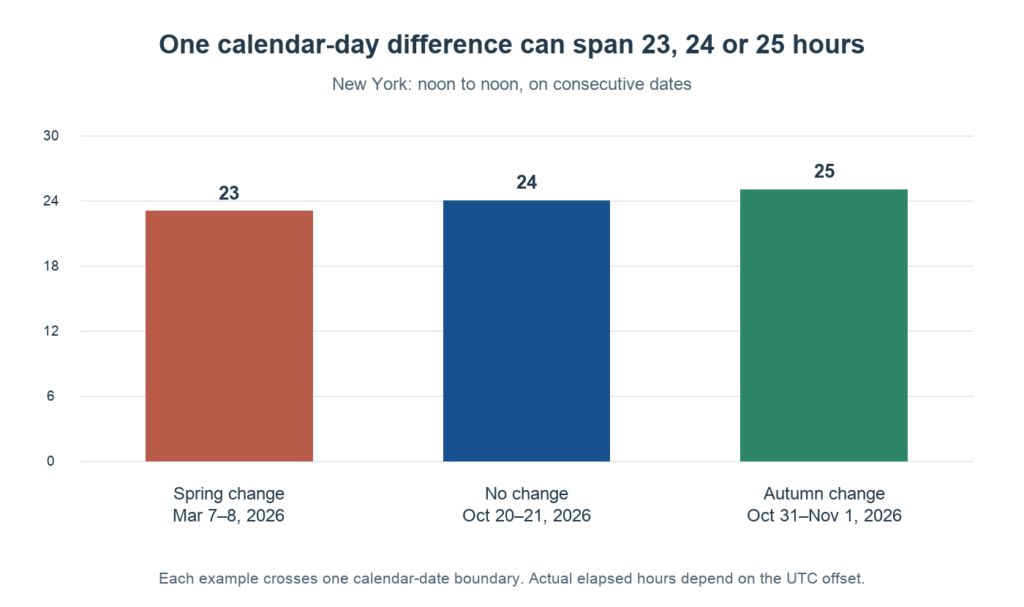
Calendar Days: 3 Simple Checks Against 24-Hour Periods
A date difference and an elapsed duration answer different questions. See why one calendar day can span 23, 24 or 25 hours around a clock change.
Find examples for date intervals, working days, deadlines, elapsed time, and time zones. Use the date difference calculator, time zone converter, or age calculator. Calendar-day counts, overnight stays, and working-day counts can use different inclusion rules.
A date difference and an elapsed duration answer different questions. See why one calendar day can span 23, 24 or 25 hours around a clock change.
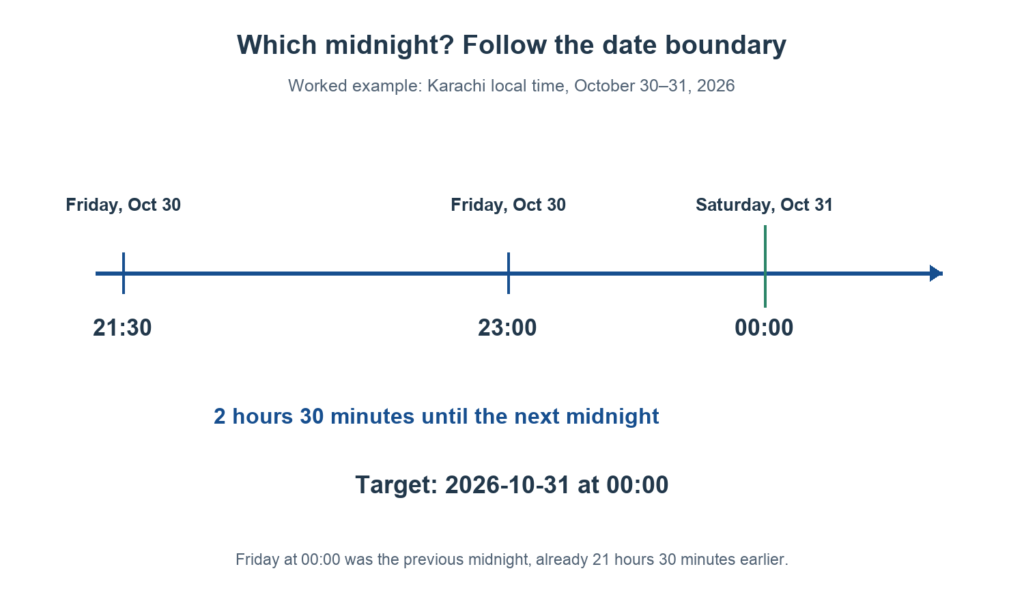
Midnight is the boundary between two dates. An explicit date plus 00:00 prevents a countdown from targeting the wrong night.

A February 29 birthday does not make someone age four times more slowly. Separate elapsed time, birthday celebrations and the rule used for a particular decision.
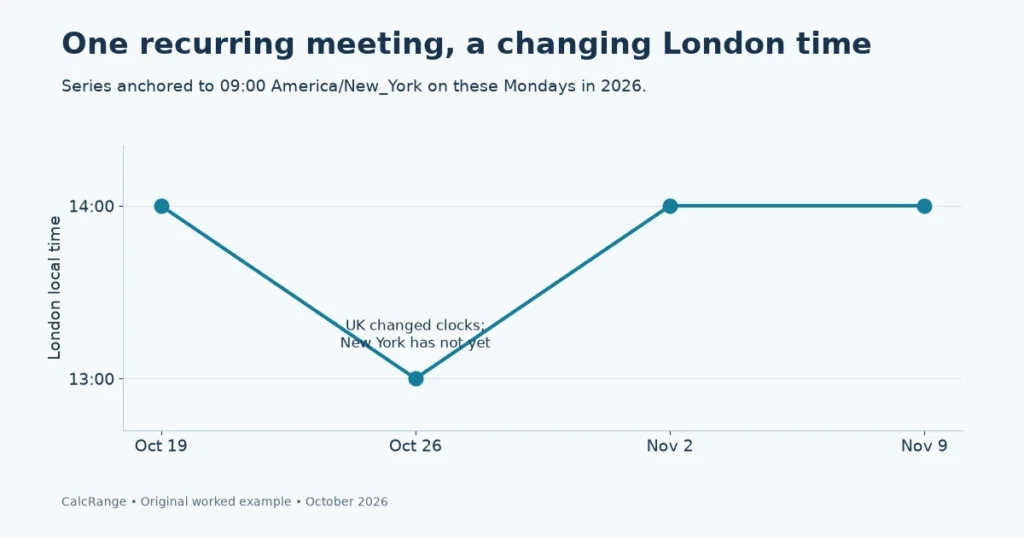
Audit a recurring meeting on both sides of mismatched daylight-saving changes, using explicit city zones and dated examples.
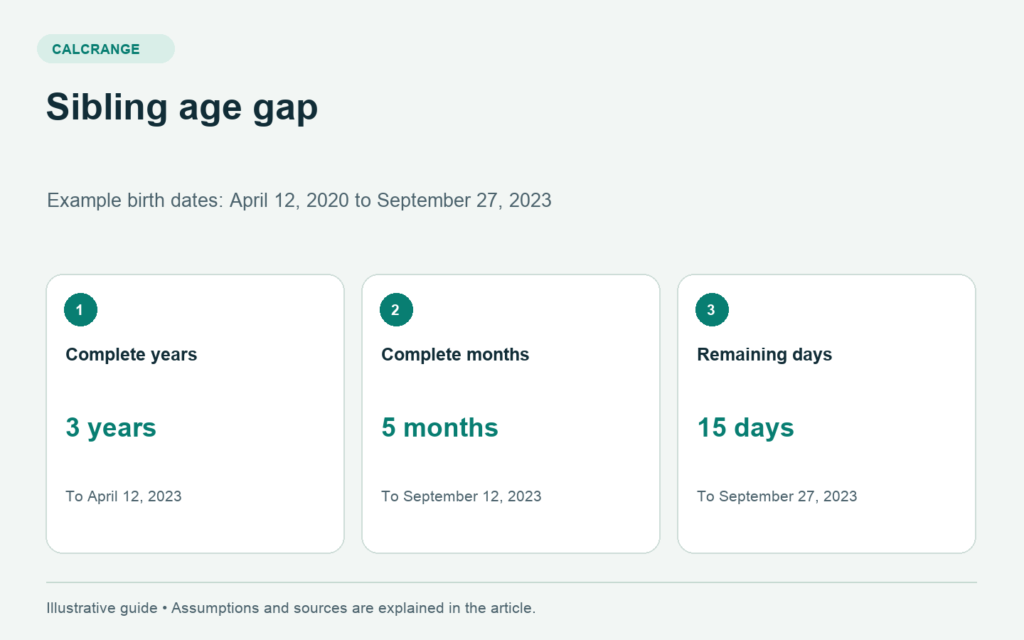
The age difference between siblings is the time between their birth dates. For an exact answer, compare the dates themselves rather than subtracting their current ages in whole years. Two children described as 6 and 3 may be separated by anything from a little over two years to almost four years.
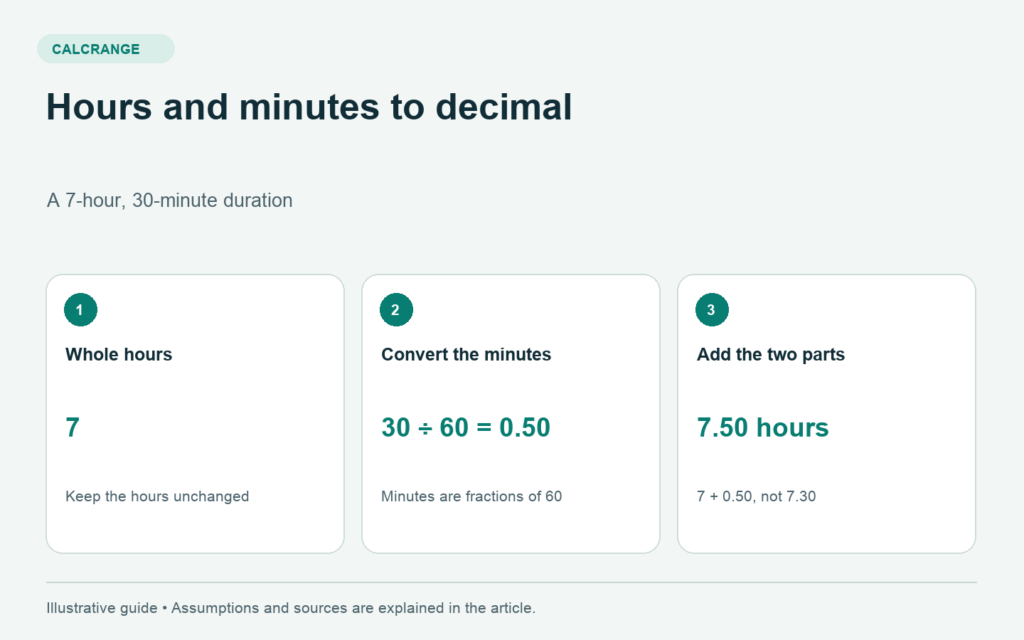
To convert hours and minutes to decimal hours, divide the minutes by 60 and add the whole hours. 7 hours 30 minutes = 7 + 30 ÷ 60 = 7.50 hours. It does not equal 7.30 hours.
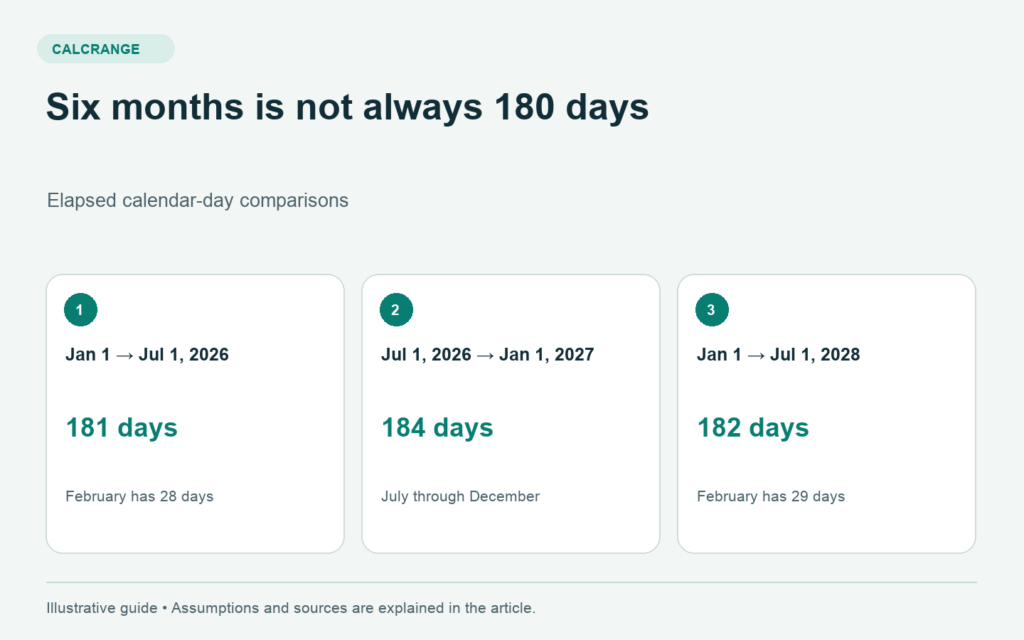
Six months does not have one fixed number of days. The exact total depends on the start date, the end date and whether February includes a leap day. For example, January 1 to July 1, 2026, is 181 elapsed days; July 1, 2026, to January 1, 2027, is 184.
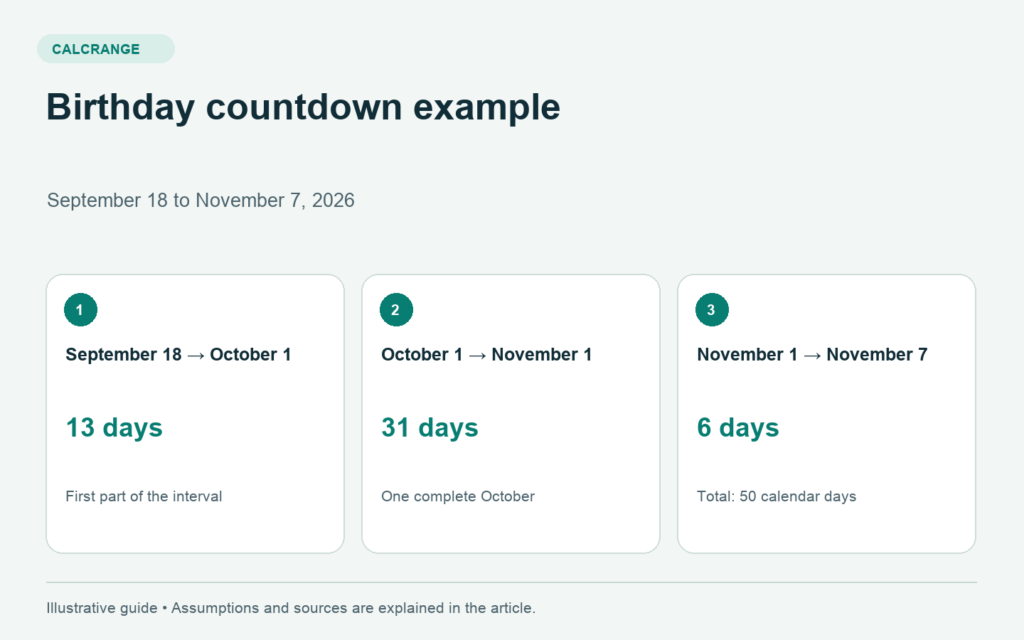
To find how many days are left until your birthday, compare today’s calendar date with the next occurrence of your birthday. If this year’s date has already passed, use next year. For a live countdown, choose a specific time as well as the date.
A month-by-month 2026 working-day table, plus formulas for weekends, holidays, part-time schedules, and payroll planning.

Inclusive counting includes a boundary date; exclusive counting leaves it out. Use this guide to prevent common one-day errors.