
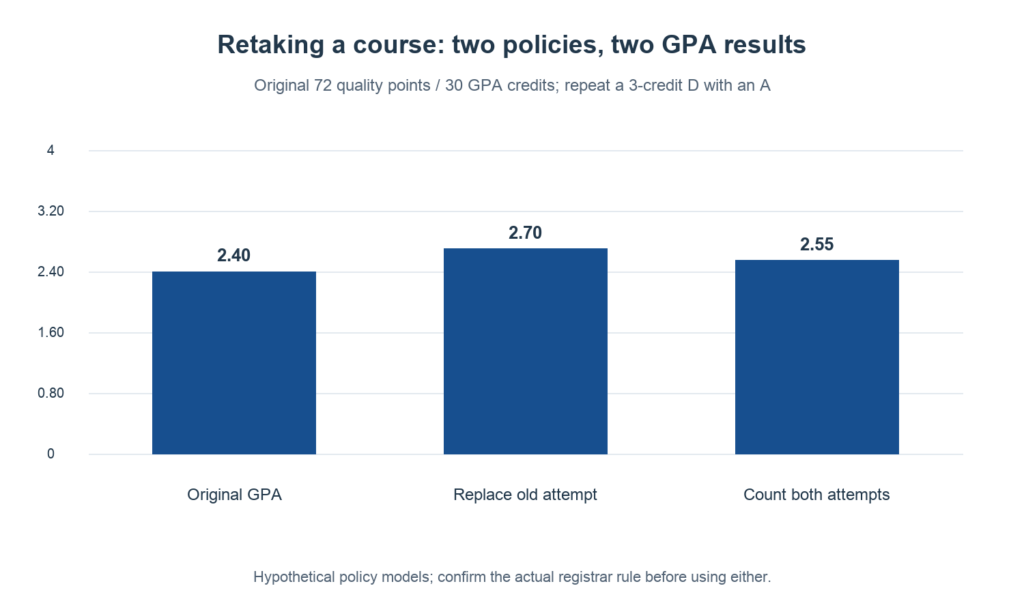
Retaking a Course: 2 Essential GPA Policy Checks
Compare retaking a course GPA under grade replacement and counting both attempts. Follow a 30-credit example and check the registrar’s repeat policy.
Use worked examples to understand percentages, averages, grades, ratios, and practical conversions. Try the percentage calculator, GPA calculator, or unit converter. Grade and GPA rules depend on the selected scale and your institution.
Compare retaking a course GPA under grade replacement and counting both attempts. Follow a 30-credit example and check the registrar’s repeat policy.
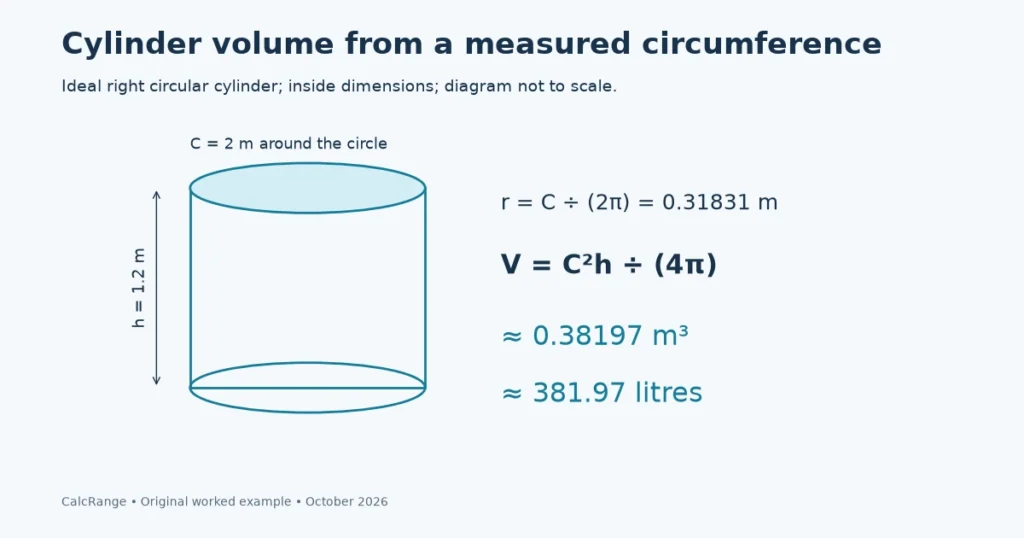
Use a measured circumference to derive a cylinder’s radius, then calculate volume with explicit internal-versus-external measurement assumptions.

A loss and its recovery use different starting amounts. Work through the formula, a comparison table and the zero-value limit.

A byte-first worksheet for comparing decimal and binary storage labels without mistaking a change in units for missing data.
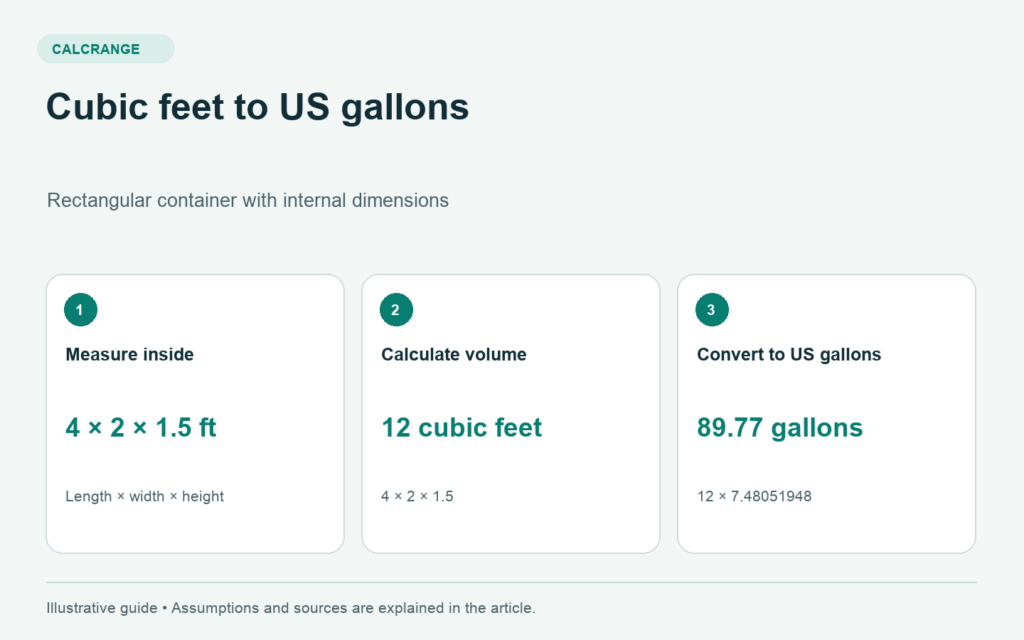
One cubic foot equals approximately 7.48052 US liquid gallons or 6.22884 imperial gallons. Multiply cubic feet by the appropriate factor. Always label the gallon system so the result cannot be mistaken for a different capacity.
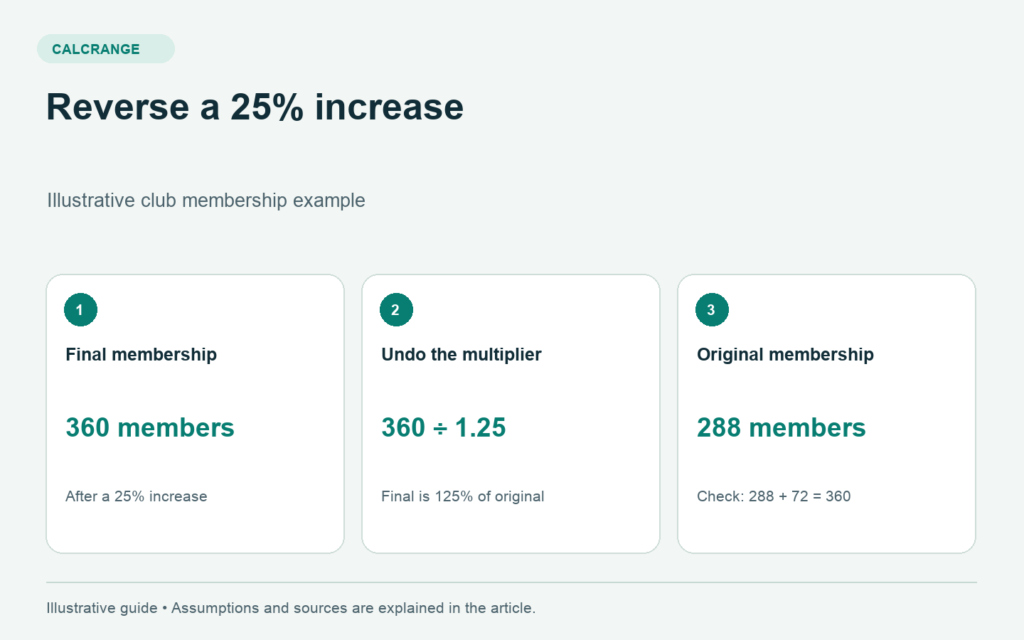
A reverse percentage works backward from a final amount to the amount before a percentage change. Divide by the percentage multiplier: original = final ÷ (1 + rate) after an increase, or original = final ÷ (1 − rate) after a decrease. Write the rate as a decimal.
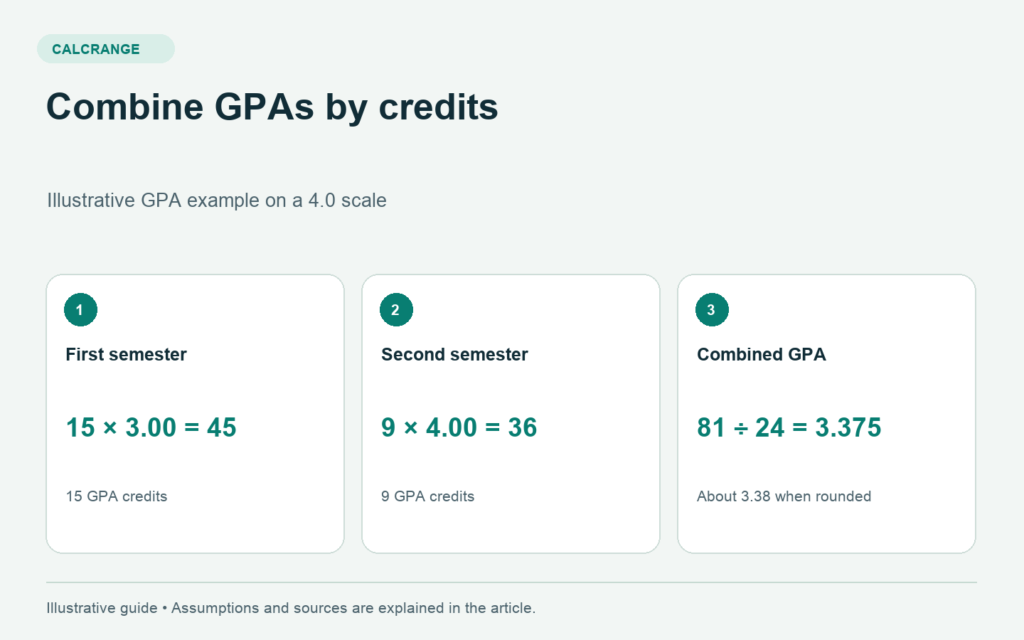
A semester GPA summarizes the eligible graded courses in one semester. A cumulative GPA combines the eligible graded courses across the relevant terms. When terms have different credit loads, the cumulative figure is a credit-weighted average, not a simple average of the term GPAs.
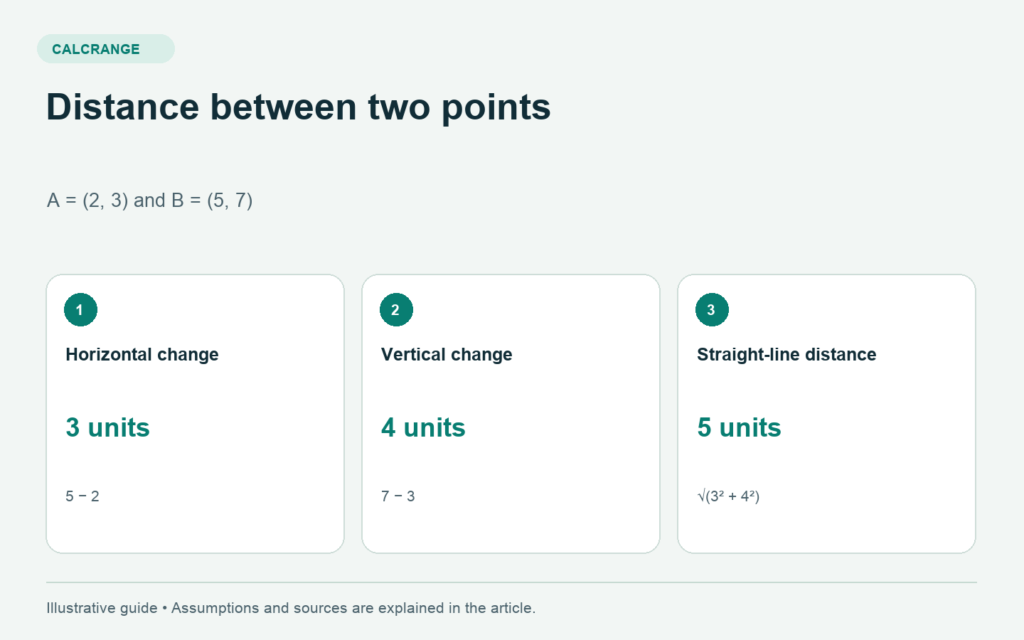
The distance between two points on a flat coordinate plane is d = √[(x₂ − x₁)² + (y₂ − y₁)²]. Subtract the horizontal coordinates, subtract the vertical coordinates, square both differences, add them and take the square root.

Use this GPA-to-letter-grade reference for quick estimates, then check your school’s official grading policy before making decisions.

Learn the weighted-average formula with worked examples for grades, prices, and portfolio returns, plus the mistakes that change the answer.