
Understanding Calorie Calculators: A Comprehensive Guide
You have likely typed your height and weight into three websites, only to stare in frustration at three completely different daily targets. Getting this number wrong feels like trying to build a house without a tape measure. We know calories are simply units of energy used for fuel, but figuring out exactly how much fuel your unique body needs can feel overwhelming. You can check your BMI & BMR by click on it.
Nutritionists generally agree that treating a calories calculator like a flawless crystal ball causes unnecessary stress. Because of estimator variance—the natural mathematical differences in how these formulas weigh your daily activity these tools provide data-driven estimates rather than absolute laws. They establish your metabolic baseline, the rough starting point of energy your body requires just to function.
Think of this initial estimate as a nutritional GPS route: it points you toward your destination, but you still have to steer. Instead of guessing, you can use calorie calculators to understand your energy needs and adjust your daily budget for consistent progress in weight loss or muscle gain.
Calorie Calculator
Estimate how many calories you need each day to maintain, lose or gain weight, based on your body and activity level.
Calories for your goal
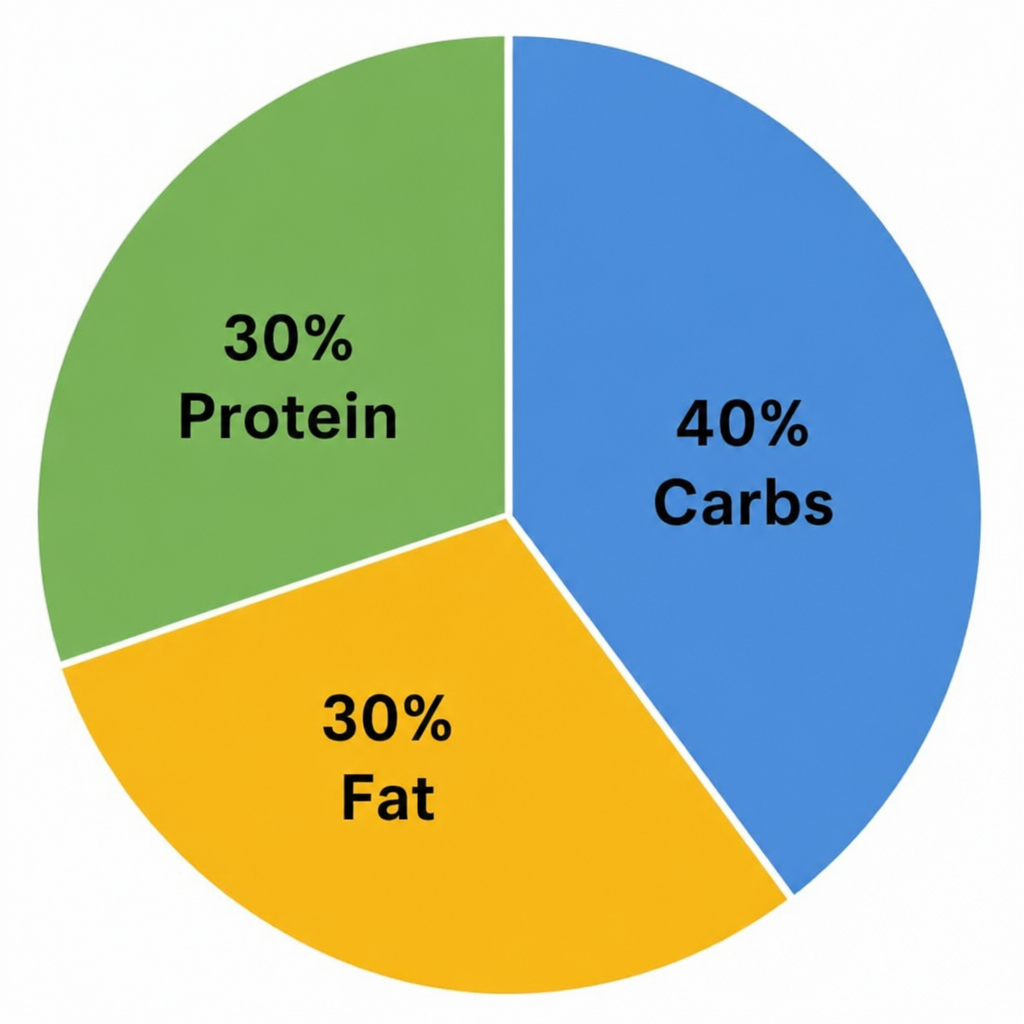
Suggested daily macros (at maintenance)
These are general estimates. For sustainable, healthy results avoid very low intakes (most adults shouldn’t drop below about 1,500 kcal for men or 1,200 for women without medical supervision). Speak to a doctor or registered dietitian before making big changes — especially if you have any health condition or history of disordered eating.
BMR vs. TDEE: Why Your ‘Survival Calories’ Aren’t Your ‘Goal Calories’
Your body burns fuel around the clock. Think of your Basal Metabolic Rate (BMR) as your body’s “fixed bills” the minimum energy required to keep your heart beating and lungs breathing if you stayed in bed all day.
But you rarely just sleep all day, which is why basal metabolic rate calculation methods only give us step one. Walking the dog, folding laundry, or pacing the room spends extra energy. Nutritionists call this your Activity Factor, which acts as the fluctuating “fun money” added to your overall daily budget.
Adding those fixed bills to your daily movement gives you your Total Daily Energy Expenditure (TDEE). Ultimately, the TDEE vs BMR difference is simply survival versus reality. A reliable daily calorie calculator uses your TDEE to set realistic targets, which perfectly explains why a sedentary office worker naturally requires fewer calories than an active nurse.
Connecting your baseline and activity levels removes the frustrating guesswork from your fitness journey. These combined metrics create your true daily target, calculated through proven equations like Mifflin-St Jeor.

Inside the Engine: How Equations Like Mifflin-St Jeor Predict Your Needs
Most fitness apps don’t run on magic; they rely on established formulas to estimate your energy needs. Nutritionists widely trust the Mifflin-St Jeor equation accuracy because it weighs your specific age, gender, height, and weight. For instance, age naturally slows down how fast we burn fuel, while gender accounts for average muscle mass differences. These personal variables ensure your starting point is heavily customized rather than just a generic guess.
Once the formula calculates your biological baseline, it scales that number up based on your daily movement. This second step shows exactly how to calculate maintenance calories, but it is also where people trip up by accidentally overestimating their exercise routines. The math uses these typical multipliers to build your budget:
- Sedentary (x1.2): Desk jobs and casual daily tasks like folding laundry.
- Moderate (x1.55): Exercising 3–5 times a week, plus regular movement.
- Active (x1.725): Physically demanding jobs or intense daily training.
Being completely honest here is crucial because an inflated activity factor multiplier impact will give you a daily target that is simply too high for real progress.
By combining your physical data with a realistic assessment of your lifestyle, you finally get a trustworthy estimate. With this maintenance target established, you can safely adjust the math to find your optimal deficit for fat loss without crashing your metabolism.
Finding Your ‘Sweet Spot’ for Fat Loss Without Crashing Your Metabolism
Knowing your maintenance number is empowering, but now we need to put that data to work. To see results, you must create a caloric deficit—meaning you spend more energy than you consume. A reliable calorie deficit calculator helps you subtract roughly 300 to 500 calories from your baseline, forcing your body to dip into stored fat for fuel without making you miserable.
Slashing your intake drastically might sound like a quick shortcut, but it actually triggers metabolic adaptation, a survival mode where your body slows down to conserve energy. To protect your health and preserve muscle, you should never drop below the established safety floor. A sensible weight loss calorie calculator recognizes that women need at least 1,200 daily calories to function properly, while men require a minimum of 1,500.
During the first week of this new routine, you will likely see the scale drop dramatically. While exciting, this initial plunge is mostly water weight, not true tissue change. Using a calorie calculator to lose weight effectively means playing the long game, expecting steady progress of about one pound per week rather than chasing unsustainable overnight miracles that usually bounce right back.
Maintaining this moderate pace ensures you trim down while keeping your engine running smoothly. If your primary goal is getting stronger, the math flips entirely to fuel growth with a caloric surplus that builds muscle rather than storing fat.
Fueling Growth: Setting a Caloric Surplus That Builds Muscle, Not Just Fat
Flipping the script from losing fat to building muscle requires a mindset shift. Instead of eating less, your body needs extra energy—a caloric surplus—to construct new tissue. Using a calorie calculator to gain muscle provides a reliable starting point to add fuel without accidentally storing unwanted body fat.
Piling on thousands of extra calories isn’t a magical shortcut, partly because of how human digestion works. Think of digestion as a biological “processing fee.” Getting the thermic effect of food explained is simple: your body charges a small energy tax to physically break down meals. A smart calorie surplus calculator automatically factors in this invisible daily burn so your math stays accurate.
To ensure extra energy builds strength rather than soft tissue, nutritionists recommend a conservative approach over an all-you-can-eat buffet. Here is your best starting point for establishing a caloric surplus for lean bulking:
- Lean gain: 200 extra calories
- Standard: 400 extra calories
- Aggressive: 500+ extra calories
Hitting this new target consistently is just the beginning. Total fuel requirements must come from the right nutrients, relying on specific macro ratios to shape your body composition.
Beyond the Total: Using Macro Ratios to Shape Your Body Composition
Hitting your total calorie target decides if your weight changes, but macronutrients—protein, carbs, and fats—decide what that weight looks like. Think of calories as raw construction materials, while macros are the specific mix of bricks, wood, and steel. To improve your body composition (the ratio of muscle to fat), you need the correct materials.
Protein acts as your structural steel, making it the critical number to calculate first. When determining protein requirements for muscle gain, nutritionists recommend 0.7 to 1 gram per pound of body weight. This ensures your body actively repairs tissue rather than breaking down existing muscle.
Your remaining fuel comes from carbohydrates (workout energy) and dietary fats (essential for healthy hormone function). A smart macro and calorie calculator establishes these baselines automatically, but you should adjust your focus based on your goal. Here are the recommended protein ranges:
- Fat Loss: Higher protein (1g per lb) to aggressively preserve muscle while you eat fewer total calories.
- Muscle Gain: Moderate-high protein (0.7g – 0.9g per lb) which leaves more room in your budget for energy-boosting carbs.
Dialing in macro ratios for fat loss or growth turns a basic diet into a physique-building roadmap. Yet, flawless math eventually meets biological reality. When your body inevitably adapts and progress stalls, you must adjust your plan to get the scale moving again.
When the Math Fails: Adjusting Your Plan When the Scale Won’t Move
You’ve hit your targets perfectly, yet the scale suddenly refuses to budge. Before you slash your food intake and wonder why is my calorie calculator inaccurate, remember that these tools provide a starting estimate, not a biological law. Managing calorie deficit plateaus requires patience, so nutritionists recommend the “14-day rule.” Track your current numbers consistently for two full weeks before changing anything, since daily weight fluctuates wildly based on simple water retention.
If your two-week trend still shows zero progress, the culprit is often a subconscious drop in your daily movement. When we eat less, our bodies automatically conserve fuel by reducing our casual pacing, standing, or fidgeting. This hidden calorie burn requires estimating non-exercise activity thermogenesis (NEAT). Instead of starving yourself to force a change, you can often restart your progress simply by adding a brisk 15-minute daily walk to boost your NEAT back to baseline levels.
Treating this process like a science experiment takes the emotion out of stalling. Gathering reliable data and tweaking habits slightly keeps you in total control of your transformation.

Your 3-Step Roadmap: From First Calculation to Final Transformation
Calorie calculators are not magic crystal balls; they simply provide your most reliable starting baseline. You finally understand the difference between your fixed resting energy budget and your flexible daily activity spending.
To turn this math into momentum, follow this action plan:
- Input your stats into a calories burned calculator to establish your maintenance baseline.
- Commit to a two-week testing phase at those calories to validate the estimate against your actual metabolism.
- Focus on setting realistic body composition goals for the next three months instead of stressing over daily perfection.
Remember, your calculator results are the opening move, not a life sentence. Treat your daily numbers as feedback, adjust your targets when progress stalls, and watch how consistent action transforms your physique over time.
How many calories should I eat a day?
Most adults need roughly 1,800–2,400 calories per day, but your exact number depends on age, sex, weight, height, and activity level. A calorie calculator estimates this by finding your BMR and multiplying it by an activity factor to get your TDEE. Treat the result as a starting point and adjust based on real progress.
How do I calculate a calorie deficit?
A calorie deficit is your maintenance calories (TDEE) minus the calories you eat. Subtract a moderate amount from your TDEE to lose weight gradually while preserving muscle. The calculator does this automatically once you enter your details and select a weight-loss goal.
How many calories should I eat to lose weight?
To lose weight you need to eat fewer calories than your body burns each day. A modest reduction from your TDEE produces steady, sustainable loss without slowing your metabolism. Enter your stats above and choose “lose weight” to get your personal target.
How many calories should I eat to gain muscle?
To build muscle, eat slightly more than your TDEE — a small surplus combined with resistance training. A large surplus mainly adds fat rather than building muscle faster. The calculator shows your maintenance figure plus a recommended surplus when you select a muscle-gain goal.
What are maintenance calories?
Maintenance calories are the number of calories you need to keep your current weight steady — no loss or gain. This is essentially your TDEE: the total energy your body uses in a day. Every weight goal is built relative to this number.
What is the difference between BMR and TDEE?
BMR (Basal Metabolic Rate) is the calories your body burns at complete rest, while TDEE (Total Daily Energy Expenditure) adds the calories you burn through movement, exercise, and digestion. TDEE is always higher than BMR. You should set your eating targets against your TDEE, not your BMR.
How accurate is a calorie calculator?
Calorie calculators are estimates with a typical margin of about 10–15%, because factors like metabolism and daily activity vary from person to person. Use your result as a baseline, track your weight for two to three weeks, then adjust if your real progress doesn’t match the estimate.
How many calories are in a pound of fat?
There are roughly 3,500 calories in a pound of body fat (about 7,700 calories per kilogram). This is why a consistent daily deficit adds up to measurable weight change over a week. It’s a useful rule of thumb, though real-world results vary.
Why am I not losing weight in a calorie deficit?
The most common reason is underestimating how much you actually eat — studies show people often under-report intake. Daily water-weight swings can also hide real progress, so use a 7-day weight average instead of a single day. If you’re truly in a deficit and still stalled for several weeks, recalculate your TDEE, since it drops as you lose weight.
Is it safe to eat below my BMR?
Eating below your BMR for long periods is generally not recommended, as it can leave you under-fueled and may make a diet harder to sustain. Most health sources suggest losing weight through a deficit from your TDEE rather than extreme restriction. If you have a medical condition, are pregnant, or have a history of disordered eating, speak with a doctor or registered dietitian before setting calorie targets.