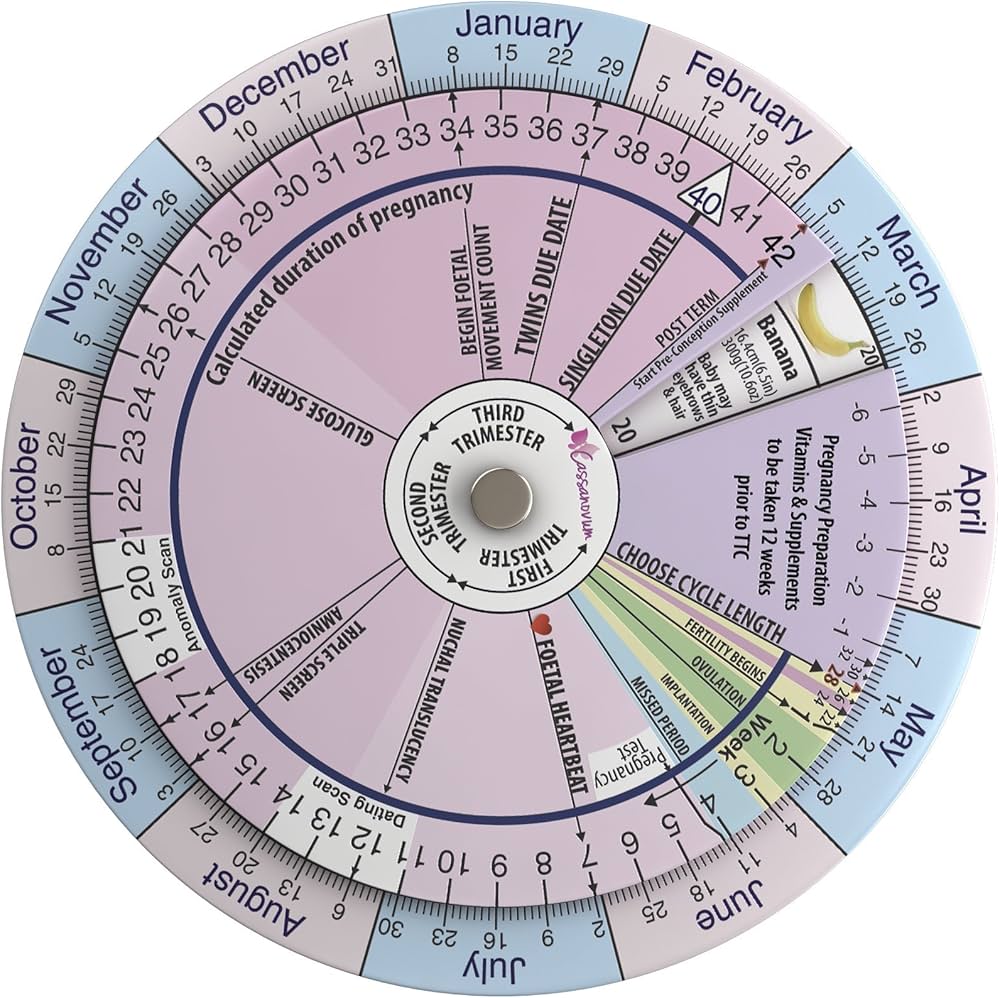
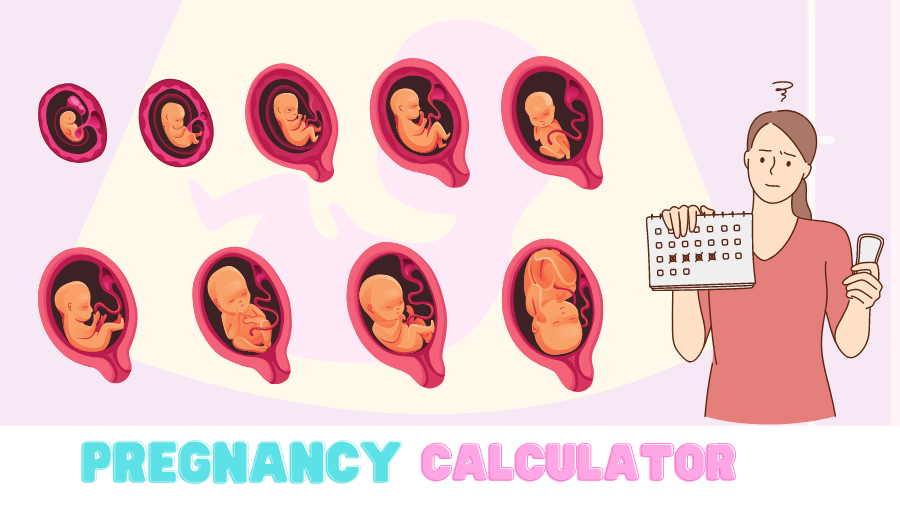
After finding out you’re expecting, one of the first and most exciting questions is “When is my baby due?” Our pregnancy due date calculator gives an approximate estimation within seconds by taking into account factors like your LMP date and average cycle length to produce an estimate using standard healthcare provider calculations.
Start off with this in mind: your due date is an estimate and not a hard and fast date. It serves as the center of a window when most babies tend to arrive; some might arrive before or after. Our calculator can give you a useful starting point; your doctor or midwife will confirm and refine it with early ultrasound scans.
This tool should only be used as an indication and should never be seen as a replacement for professional advice from healthcare providers. Please verify your due date with them directly for optimal health outcomes.More Calculators: www.calcrange.com
Pregnancy Due Date Calculator
Estimate your due date and see how far along you are. Choose the method that fits your situation.
Key milestones
This is an estimate based on a standard 40-week (280-day) pregnancy. Only about 1 in 20 babies arrive on the exact due date — most are born within two weeks either side. Always confirm with your doctor or midwife. Not medical advice.
How to Use This Due Date Calculator (PDCalc)
This calculator requires two pieces of information from you in order to calculate an approximate due date: firstly, the start date of your last menstrual period (LMP), not its end day; and secondly, your average cycle length – usually 28 days but typically 22 to 44 – from starting one period until its corresponding first day starting another one (typical cycles typically last 28 days, though 22 to 44 day cycles can also occur). Enter this data, press calculate, and your estimated due date will appear as soon as it can. If your cycles vary considerably then use your best averages before speaking with your healthcare provider about this matter further.

How Are Due Dates Calculated?
Naegele’s rule, developed by German obstetrician Franz Naegele in the early 1800s and still widely utilized today by clinicians worldwide, provides an accurate method for estimating your due date. The rule works from your last menstrual period: full-term pregnancy can typically last about 40 weeks (280 days) after its first day.
Simplest way: take your LMP, add one year, subtract three months and add seven days – for instance an LMP of 15 March would give an estimated due date around 22 December of the same pregnancy year. Naegele’s rule assumes 28-day cycles with conception occurring two weeks post LMP start date; this calculator follows this 40-week method while also adapting for cycle length to produce more accurate estimates.
Why Cycle Length Is Important
The 280-day rule assumes everyone has a natural 28-day cycle; however, every woman’s cycle length affects when she actually ovulates and can become pregnant. If your cycle lasts longer than 28 days, ovulation usually happens later and conception happens later as well, pushing out your due date even further than what a basic LMP estimate suggests. Someone with a 35-day cycle may expect their due date about one week later than estimated by LMP estimates. If your cycle is shorter than 28 days, this calculator asks for information on the length of your cycle instead of simply assuming 28 days; this enables more personalized estimates. LMP dating may not provide reliable estimates when dealing with highly irregular cycles; therefore early ultrasound becomes the only reliable means of dating the pregnancy.
Gestational Age and Weeks of Gestation
Your gestational age, measured since the first day of your LMP, serves as an important indicator for prenatal appointments and milestones during gestation. Therefore, prenatal appointments and milestones often refer to weeks (“you are 20 weeks along”) counted from your LMP rather than conception date – with full gestation lasting 40 weeks as per this count; when counted from conception date instead, it is about 38 weeks (roughly two weeks less, since conception occurs about two weeks after the LMP). Knowing your LMP-based gestational age helps both you and your care team track development while planning necessary checks and scans during gestation.
How Accurate Is a Due Date?
Be clear on expectations: only about five percent of babies actually arrive on their estimated due dates; rather, consider it more as the midpoint between possible birth dates rather than as a promise that all babies will arrive on that particular day. Pregnancy is considered full term between 37 to 42 completed weeks; most babies arrive somewhere within this window. Clinicians use four distinct terms to categorize full term gestations: early term (37-38 weeks), full term (39-40 weeks), late term (41 weeks), and post term (42+ weeks). Research suggests the classic Naegele’s rule may put your due date a few days early on average; another reason single dates should only serve as guidelines, not deadlines. For accurate dating, combine LMP with early ultrasound imaging; your provider can then use ultrasound images to confirm or adjust his estimate of when to expect.
When to Visit Your Healthcare Provider
This calculator can serve as an aid, but should never replace medical advice. Once you’ve determined an approximate due date, make an appointment to visit your healthcare provider so they can verify pregnancy, confirm dating (including first-trimester ultrasound for most accurate dating), and begin prenatal care. Your healthcare provider is well versed in accounting for irregular cycles, medical histories and ultrasound measurements that this calculator simply can’t account for; they will guide and advise throughout each stage. If any concerns arise throughout the pregnancy journey please reach out directly – they are there for you and ready to assist.
Reminder: Please keep in mind that this calculator only offers estimates as generalized guidance; it should never be seen as medical advice or diagnosis. Always verify your due date or any related health questions with an appropriately qualified healthcare provider before making decisions based on this calculator.
Here’s an SEO-optimized article draft targeting your Pregnancy Calculator keyword cluster.

Pregnancy Calculator: Estimate Your Due Date and Track Every Stage of Pregnancy
Pregnancy is an exciting journey filled with anticipation, changes, and important milestones. A pregnancy calculator helps expectant parents estimate their baby’s arrival date and understand how pregnancy progresses week by week. Whether someone wants to know their estimated due date, track fetal growth, or monitor important pregnancy milestones, a reliable calculator can provide valuable insights throughout the journey.
What Is a Pregnancy Calculator?
A pregnancy calculator is an online tool designed to estimate an individual’s expected delivery date based on information such as the first day of the last menstrual period, conception date, or ultrasound measurements. It acts as a gestational age tracker, helping parents understand how far along a pregnancy is and what developmental changes may occur each week.
Most healthcare professionals estimate pregnancy duration as 40 weeks from the first day of the last menstrual period. Using this information, a calculator can generate a detailed pregnancy timeline and provide useful guidance throughout all three trimesters.
How Does a Due Date Calculator Work?
A due date calculator typically uses one of the following methods:
Last Menstrual Period (LMP)
The most common method uses the first day of the last menstrual period. By adding approximately 280 days (40 weeks), the calculator estimates the baby’s arrival date.
Conception Date
If the exact conception date is known, the calculator can estimate the due date more accurately by counting approximately 266 days forward.
Ultrasound Dates
Early pregnancy ultrasounds can provide highly accurate dating information. Healthcare providers often compare ultrasound dates with menstrual history to determine the most reliable due date.
IVF Pregnancy Dating
For pregnancies achieved through fertility treatments, the embryo transfer date can be used to calculate gestational age and due date more precisely.
Understanding Gestational Age
A gestational age tracker helps determine how many weeks pregnant a person is. Gestational age is measured from the first day of the last menstrual period rather than the conception date.
Tracking gestational age helps healthcare providers:
- Monitor fetal growth
- Schedule prenatal appointments
- Plan important screening tests
- Track baby development stages
- Monitor pregnancy milestones
Knowing gestational age also helps parents understand what changes to expect throughout pregnancy.
Pregnancy Week by Week
One of the most valuable features of a pregnancy week by week tracker is the ability to monitor both maternal and fetal development.
Weeks 1–12: First Trimester
The first trimester is a period of rapid development. Common pregnancy symptoms during this stage include:
- Morning sickness
- Fatigue
- Breast tenderness
- Frequent urination
- Mood changes
During these weeks, the baby’s major organs begin forming, and the heartbeat becomes detectable.
Weeks 13–27: Second Trimester
Many expectant mothers experience increased energy during the second trimester. This period often includes:
- Baby movement
- Growing belly
- Improved appetite
- Reduced nausea
Important anatomy scans and growth assessments are often performed during this stage.
Weeks 28–40: Third Trimester
The third trimester focuses on preparing for delivery. Baby development accelerates as the fetus gains weight and matures.
Common symptoms may include:
- Back pain
- Swelling
- Sleep difficulties
- Braxton Hicks contractions
Regular prenatal visits become increasingly important as the expected delivery date approaches.
Baby Development Stages Throughout Pregnancy
Monitoring baby development stages helps parents understand how their child grows inside the womb.
Month 1
The fertilized egg implants in the uterus and begins developing into an embryo.
Month 2
Major organs begin forming, including the heart and brain.
Month 3
The baby develops arms, legs, fingers, and toes.
Month 4
Facial features become more defined, and movement increases.
Month 5
Parents may begin feeling fetal movements.
Month 6
Hearing develops, and the baby becomes more responsive to external sounds.
Month 7
Rapid brain development occurs.
Month 8
The baby’s lungs continue maturing.
Month 9
The baby prepares for birth and typically moves into a head-down position.

Fertility Calendar and Ovulation Tracking
Many people use a fertility calendar and ovulation tracker before pregnancy occurs. These tools help identify fertile windows and increase the chances of conception.
Ovulation generally occurs around the middle of the menstrual cycle. By tracking ovulation, individuals can estimate their most fertile days and improve family planning efforts.
A menstrual cycle tracker can also provide valuable information about cycle length, helping improve pregnancy dating calculations later.
Why Conception Date Matters
Knowing the exact conception date can improve due date accuracy. Although not everyone knows when conception occurred, those using fertility tracking methods may have a better estimate.
Accurate conception dating helps:
- Estimate gestational age
- Plan prenatal appointments
- Schedule important screenings
- Improve due date predictions
Using a Trimester Calculator
A trimester calculator helps determine which stage of pregnancy a person is currently experiencing.
Pregnancy is divided into:
- First Trimester: Weeks 1–12
- Second Trimester: Weeks 13–27
- Third Trimester: Weeks 28–40
Each trimester brings unique physical changes, developmental milestones, and healthcare recommendations.
Important Pregnancy Milestones
Tracking pregnancy milestones allows parents to stay informed throughout the journey.
Some key milestones include:
- Positive pregnancy test
- First ultrasound
- Detecting fetal heartbeat
- First baby movements
- Anatomy scan
- Third-trimester growth scan
- Full-term pregnancy
These milestones provide reassurance and help healthcare providers monitor progress.
Health During Pregnancy
Maintaining good health during pregnancy is essential for both mother and baby.
Important recommendations include:
Eat a Balanced Diet
A nutritious diet supports fetal development and maternal health.
Stay Hydrated
Adequate hydration helps maintain healthy circulation and amniotic fluid levels.
Exercise Safely
Moderate physical activity can improve energy levels and reduce pregnancy discomfort.
Attend Regular Checkups
Routine prenatal visits help identify potential concerns early.
Take Prenatal Vitamins
Folic acid, iron, and other nutrients play critical roles during pregnancy.
Prenatal Care Guide for Expectant Parents
A comprehensive prenatal care guide emphasizes the importance of regular medical supervision throughout pregnancy.
Prenatal care typically includes:
- Routine examinations
- Blood tests
- Ultrasound monitoring
- Nutritional counseling
- Vaccination guidance
- Birth planning
Following professional medical advice helps support a healthy pregnancy and delivery.
Frequently Asked Questions
How accurate is a pregnancy calculator?
A pregnancy calculator provides an estimate based on available information. Ultrasound measurements often offer the highest accuracy.
What is an estimated due date?
An estimated due date is the predicted day a baby may be born. Most babies arrive within a few weeks before or after this date.
Can ultrasound dates change my due date?
Yes. Early ultrasound measurements may adjust the estimated due date if significant differences are found.
What is the difference between gestational age and conception age?
Gestational age is measured from the last menstrual period, while conception age begins from fertilization.
Why should someone use a gestational age tracker?
A gestational age tracker helps monitor fetal development, schedule appointments, and understand pregnancy progress.
Final Thoughts
A pregnancy calculator is a valuable tool for estimating an expected delivery date, tracking gestational age, and understanding every stage of pregnancy. Combined with a due date calculator, trimester calculator, ovulation tracker, and fertility calendar, it provides expectant parents with a clear view of their pregnancy journey.
From monitoring pregnancy week by week progress to following a trusted prenatal care guide, these tools help families stay informed and prepared for one of life’s most exciting experiences.
Frequently Asked Questions:
Is this pregnancy due date calculator free and instant?
Absolutely – with no sign up necessary and an estimate for general purposes only, as recommended by healthcare providers. Please consult them as necessary when planning your due date.
Is my LMP the same as conception date?
No. Conception usually occurs two weeks post-LMP around ovulation, hence why pregnancy lasts 40 weeks from LMP but about 38 weeks from conception date.
My cycles are irregular — can this method still work for me?
While using your best average cycle length as an estimate may still work for LMP-based dating, irregular cycles make LMP less reliable; early ultrasound imaging would provide more accurate dates in these instances.
What is gestational age (GA)?
Gestational age refers to the total number of weeks since you experienced your LMP, and prenatal appointments and pregnancy milestones are measured using these weeks.
How many weeks does a full-term pregnancy last?
Depending on when your LMP (last menstrual period) occurs, full-term gestation typically lasts 37-42 completed weeks with 39-40 being considered ideal; when calculated from conception date alone it takes around 266 days.
What is Naegele’s Rule?
Naegele’s Rule is the standard formula for estimating due dates: take your LMP date, add one year, subtract three months, then add seven days – roughly equivalent to approximately 280 days from LMP date.
Why does the calculator ask about my cycle length?
Your cycle length affects when and how often you ovulate and conceive; longer cycles could push back due dates while shorter ones could bring them forward. By entering your own cycle length into the estimate tool, the resultant estimate becomes more personalized rather than taking 28 days as the default estimate.
What is an LMP?
LMP stands for the first day of your last menstrual period — not when it ended – which serves as the basis for standard due date calculations.
Is a due date calculator accurate?
While due date calculators provide a good estimation, only about 5 percent of babies actually arrive exactly on their due dates; most babies arrive between 37-42 weeks gestation. Ultrasound imaging gives the most precise dating.
How is my due date calculated?
This calculator utilizes Naegele’s rule: it counts approximately 40 weeks from the first day of your last menstrual period (LMP), adjusted according to cycle length. Simply input both data points (LMP and cycle length) for an estimate of your due date.