
Dog pregnancy ultrasound vs X-ray is not simply a choice between two interchangeable pictures. The useful question is what the veterinarian needs to establish: pregnancy, fetal viability, an estimate of stage or a litter count. An examination that helps with one question may not settle the others.
This guide helps you prepare the record and questions for that discussion. It does not select an examination for your dog or set a universal appointment date. The Dog Pregnancy Calculator can organize a timeline from the reproductive date you know, but it cannot confirm pregnancy, interpret a scan or determine whether veterinary care is needed.
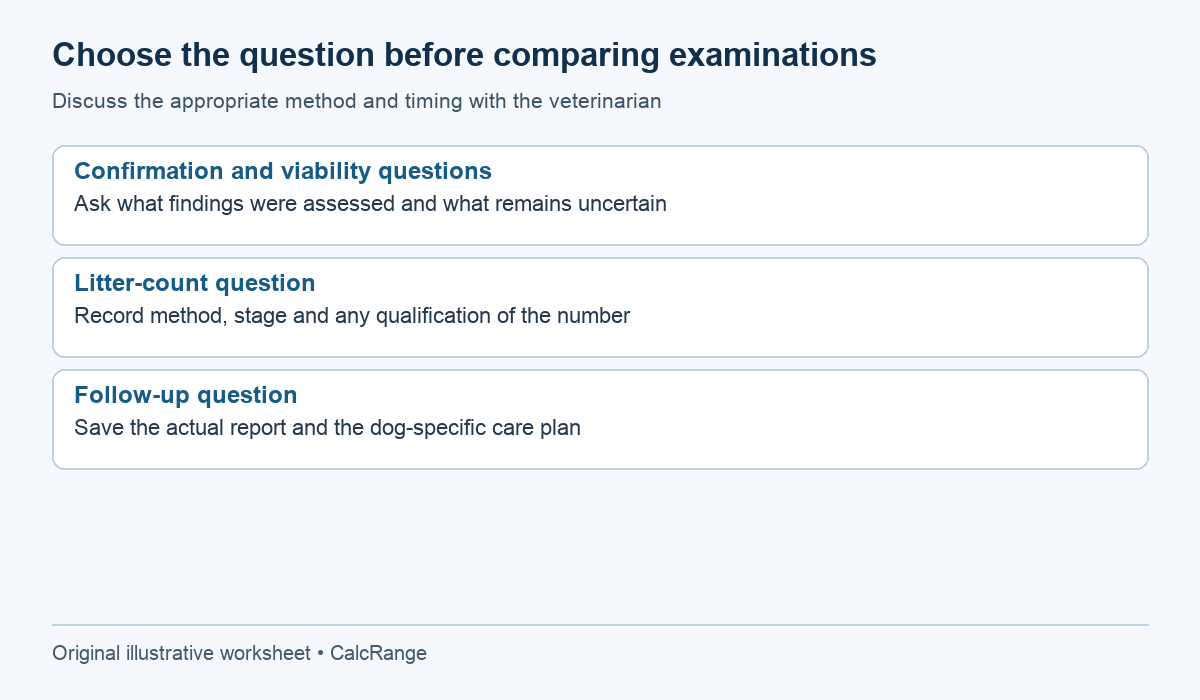
Table of Contents
1. What dog pregnancy question is the examination answering?
UC Davis veterinary guidance explains that ultrasound can visualize developing fetuses and assess viability through the fetal heartbeat. It also cautions that ultrasound litter counts can be less accurate, especially with larger litters or later examinations. Radiographs can help count mineralized fetal skeletons later in pregnancy, but they do not provide the same heartbeat-based viability assessment.
That distinction gives you a practical opening question: “What decision is this examination intended to help with?” Write the answer down. A request to confirm pregnancy and a request for a late-pregnancy count should not be treated as the same appointment objective.
| Question | What to ask the veterinarian | What not to assume |
|---|---|---|
| Pregnancy confirmation | What findings support the conclusion at this stage? | A calculator result is confirmation |
| Viability assessment | What was assessed and what remains uncertain? | A number of visible structures proves ongoing health |
| Estimated stage | What dating basis and uncertainty were used? | The scan date is conception day |
| Litter count | How should this number be recorded and used? | Every early count is an exact final total |
2. Which dog pregnancy dating evidence is actually known?
A mating date, a veterinary-timed ovulation date and an examination date are different events. Bring all recorded matings and any reproductive test reports. Do not relabel the first mating as confirmed ovulation because a narrower calculator range looks more useful.
Merck Veterinary Manual describes ultrasound as especially useful around 25–35 days of gestation and warns about false negatives before 21 days. It describes later radiography, after skeletal mineralization, and identifies examinations after 55 days as most useful for litter size. These are clinical reference intervals, not instructions to book a particular day from an uncertain mating record.
Ask the clinic how it is dating the pregnancy and which records it needs to choose the timing. Our mating-versus-ovulation timeline guide explains the calendar distinction separately.
If you use CalcRange, select the date basis that matches documented evidence. Keep the selected basis with the output. Changing a dropdown changes the assumption used by the calculation; it does not create a new clinical observation.
3. What does the dog pregnancy report actually say?
Consider a fictional record that reads “pregnancy identified; four fetuses visualized during this examination; discuss further assessment with the clinic.” A poor summary would turn that into “four puppies guaranteed.” A better owner note preserves the wording, examination date and follow-up instructions.
Similarly, “not identified at this examination” and “definitively excluded” are not interchangeable phrases. Ask the veterinarian what the particular result means given the timing and findings. Do not resolve an uncertain report by comparing the dog’s abdomen with online photographs.
The distinction is also temporal. A documented finding describes the examination performed at that time. It does not replace later assessment if the animal’s condition changes. Keep new observations and veterinary contacts in a dated log instead of treating an old result as an all-purpose reassurance.
4. How should a litter count be recorded?
Use a separate field for “number reported” and another for “method and qualification.” That makes it possible to distinguish an early estimate from a later count without erasing either. A change in the recorded number is a reason to ask for interpretation, not to invent a diagnosis from the difference alone.
| Record | Keep this wording | Avoid this unsupported rewrite |
|---|---|---|
| First examination | Four visualized; report retained | Exactly four will be born |
| Later examination | Five reported; method and date recorded | The earlier examiner necessarily made an error |
| Veterinary plan | Follow-up instructions copied accurately | Wait until the calculator’s final date regardless of condition |
The numbers in this table are invented solely to demonstrate recordkeeping. They are not patient data or an expected pattern for your dog. The veterinarian should explain any difference in the actual records and how it affects preparation.
5. What follow-up plan applies to this dog?
Ask what information should prompt a call, which number to use during and outside normal hours, and where the written plan will be stored. Keep those instructions accessible to anyone caring for the dog. A calculator screenshot does not communicate a clinical handover.
Do not use this article to attempt abdominal palpation, interpret an ultrasound image yourself or decide on induction or a delivery procedure. Those are outside the task of comparing record types. If the dog is unwell or you are concerned about labor, contact a veterinarian rather than waiting for a calendar threshold.
If another person attends the appointment, give them the questions in advance and ask for the actual report. Retelling “the scan was fine” can lose the purpose, limitations and next steps that made the examination useful.
Three ways to organize the dog pregnancy examination record
Check 1: keep the appointment date separate from the dating basis
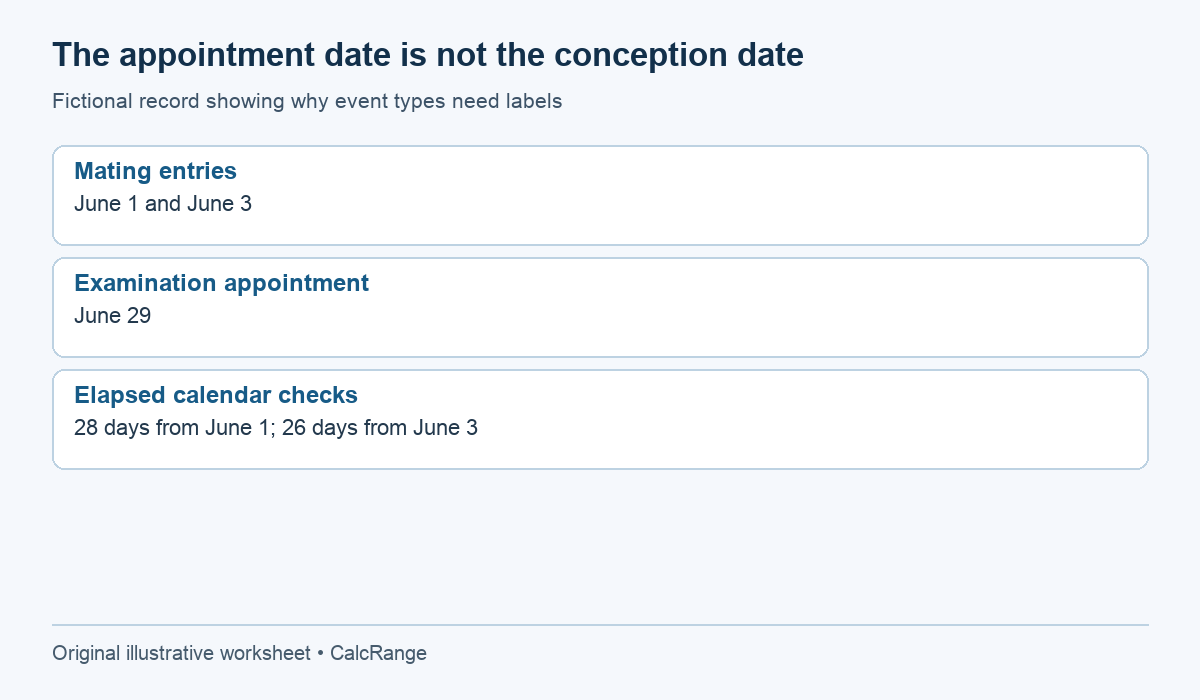
Consider a fictional record with a mating entry on June 1, another entry on June 3 and an examination appointment on June 29. June 29 is the date of the appointment. It is not automatically a conception date, an ovulation date or a new start date for the pregnancy calculator.
Keep those events on separate lines. If a report states an estimated gestational age, preserve the wording and ask the veterinary team what dating basis it uses. Do not convert the estimate into an exact biological date unless the clinician explains that interpretation. A calculator accepting a mating date cannot determine which recorded event is the appropriate reference.
As a pure calendar check, June 1 to June 29 is 28 elapsed days and June 3 to June 29 is 26. The two-day difference comes entirely from the chosen starting record. It does not show that one examination is wrong or that the animal developed two days faster.
Check 2: preserve what the report actually says about a count
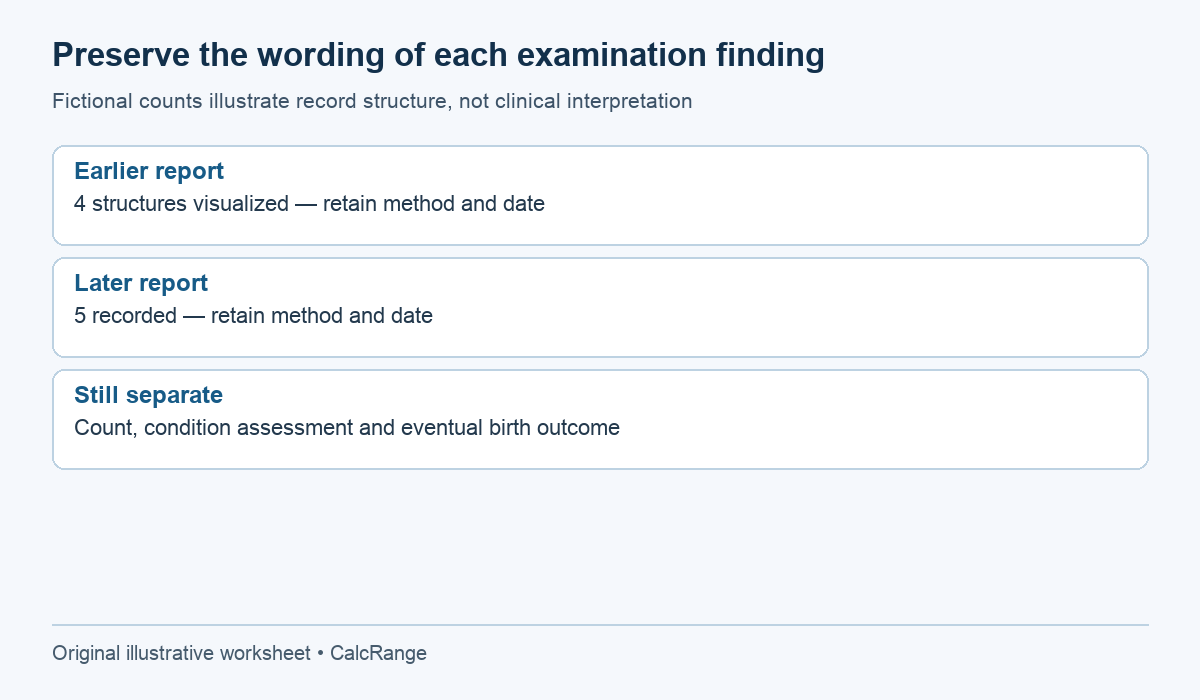
Imagine that one written report records four structures visualized and a later report records five. Copy each statement with its examination date and method. Do not replace both with a single undocumented “five puppies confirmed safe” label. A count and an assessment of condition are different findings, and a later birth outcome is another event again.
A useful dog pregnancy summary has three columns: exact finding, question it helps answer and question still unresolved. The veterinary team can explain whether a report was intended to establish pregnancy, assess what was visible at that examination or estimate the number expected. This article’s fictional numbers do not prescribe how any particular scan should be interpreted.
If someone else is caring for the dog, provide the current instructions and the original report location rather than only a screenshot of the calculator’s date. An appointment summary should identify the animal and clinic so that similarly named animals or an old pregnancy record are not accidentally combined.
When information is unclear, write the question down before contacting the clinic. “Does this count represent an estimate, and what follow-up do you recommend?” is more useful than changing the app’s expected date until its display agrees with an assumption.
Check 3: separate a planning reminder from the veterinary follow-up
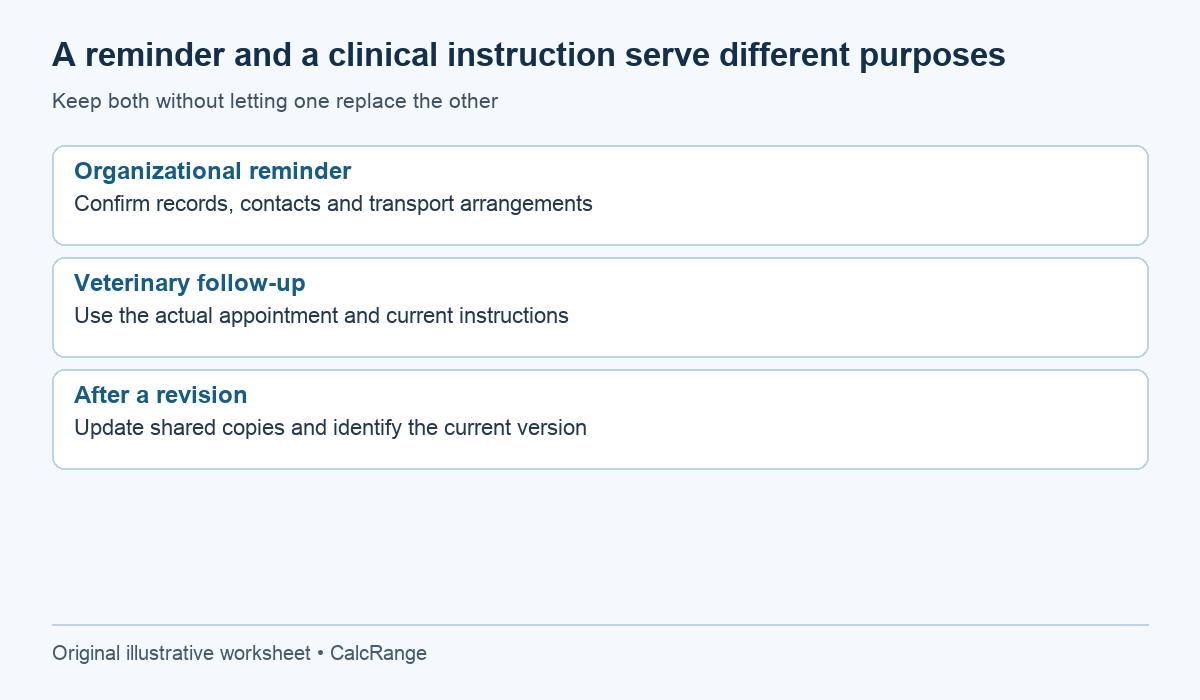
A reminder created from a calculator is an organizational prompt. A follow-up arranged by the veterinary team is an appointment or instruction with a clinical purpose. Store both, but label them differently so one does not replace the other.
For example, a calendar can contain “review transport and contact details” alongside a separately recorded clinic appointment. Completing the organizational task does not mean the examination is unnecessary. Conversely, attending an appointment does not automatically confirm that everyone covering care has the correct contact number and current written plan.
After an appointment changes the plan, update shared reminders and record who has received the revision. Keep the previous version available with a clear date, rather than leaving two conflicting versions that both look current. If the clinician advises a different follow-up schedule, do not override it with a generic milestone from a website.
The final dog pregnancy record can be compact: animal ID, dated breeding evidence, examination method and date, report reference, current instructions and named contact. A blank finding means information has not been entered; it should not be treated as a negative result. Concerns about the animal’s condition warrant veterinary contact regardless of whether a calculator says the expected date is near.
Bring a concise dog pregnancy appointment worksheet
- Dog identification and the clinic’s existing patient reference.
- Every known mating date, clearly labeled as observed or reported.
- Any veterinary timing reports, without changing their terminology.
- The specific question you hope the examination will answer.
- The current report, result qualifications and agreed next contact.
After the visit, enter the examination as a new event. Do not overwrite the breeding event with the appointment date. If the veterinarian revises the estimated window, retain the older estimate as superseded and note the source of the revision.
For a broader explanation of evidence labels, read the animal breeding-record guide. The value of a date tool lies in keeping the plan organized; the evidence about pregnancy and the individual animal comes from appropriate veterinary assessment.