 Skip to content
An animal gestation chart is useful only when the starting date is clear. A witnessed mating, a day of artificial insemination and a veterinarian-confirmed ovulation date are different records. Choosing the wrong one can make a neat-looking due date misleading.
Use the Animal Breeding Calculator to turn a recorded date into a planning estimate for cattle, goats, horses or dogs. Keep the original record beside the result so that anyone caring for the animal can see how the date was produced.
A four-species gestation reference
| Animal | Useful reference | Important qualification |
|---|---|---|
| Cow | About 283 days | Breed and calf sex can shift timing. |
| Goat | About 150 days | Merck gives a 145–155-day range. |
| Horse | About 340 days | A planning average, not an appointment. |
| Dog | 62–64 days from ovulation | Breeding at an unknown cycle stage produces a much wider 58–72-day reference. |
The cattle reference comes from Nebraska Extension; the goat and dog qualifications come from Merck Veterinary Manual. The approximately 340-day horse figure is discussed in AAEP proceedings. These figures do not confirm pregnancy or establish whether an individual animal is healthy.
Build a record that survives a handover
Create one row per animal with its permanent identification, species, breed, date format, event type, date and evidence. Add a separate field for pregnancy examination results. Do not replace the mating date with the examination date: both matter, but they mean different things.
A useful note might read: “Doe G17; observed mating; September 1, 2026; entered by owner; pregnancy confirmation pending.” That tells the next person much more than “due January 29.” If several matings were observed, retain each date. An unexplained average of them creates a date that may correspond to no actual event.
Worked example: a goat planning window
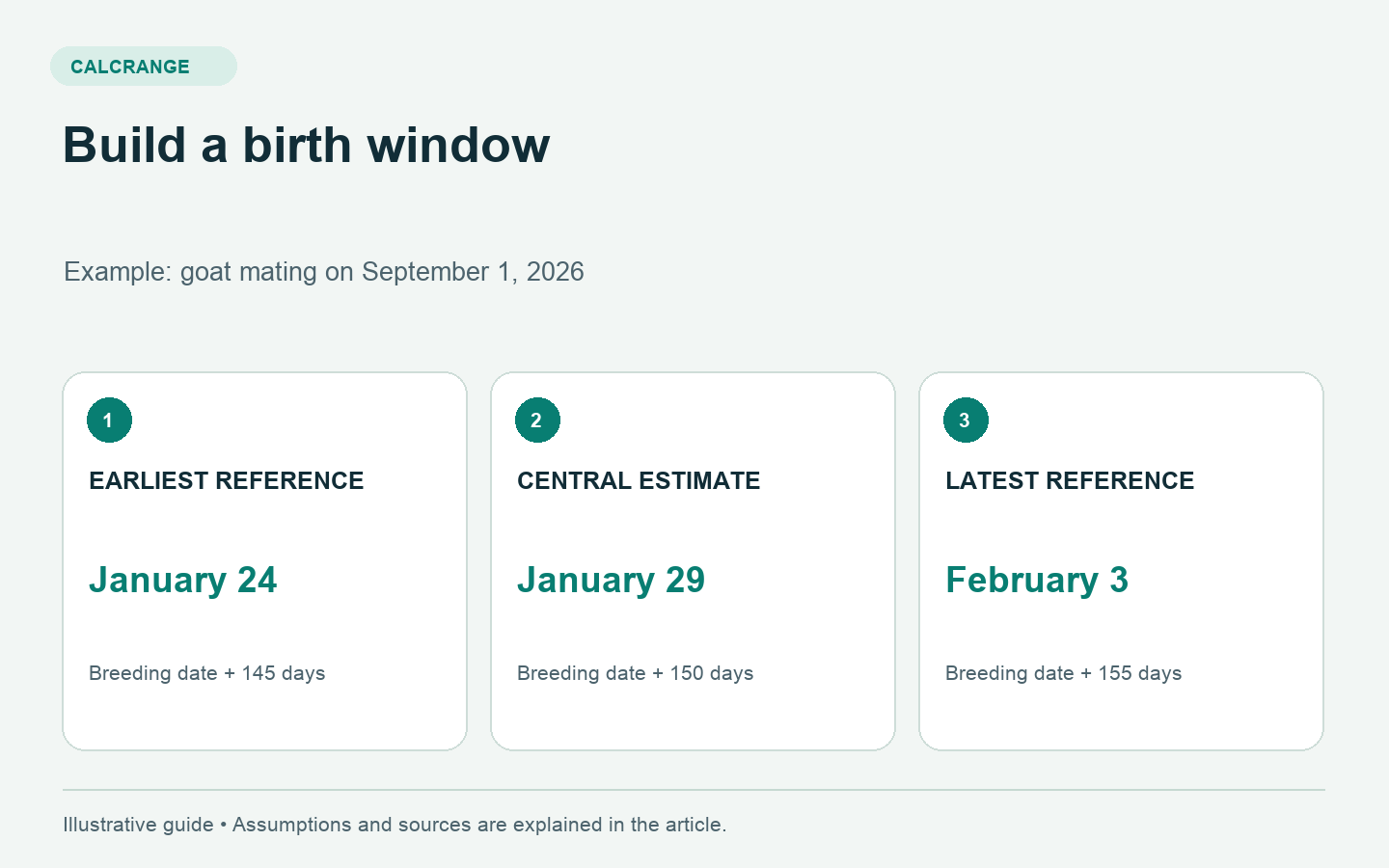
Suppose the recorded mating was September 1, 2026. Adding a 150-day planning interval gives January 29, 2027. Applying 145 and 155 days to the same starting date gives January 24 through February 3.
This is ordinary elapsed-day addition: the day after September 1 is one day later. September has 29 remaining days after the first; October adds 31, November 30 and December 31, for 121 days. Another 29 days reaches January 29. The year changes, but no special correction is required.
Record the central estimate and both window endpoints. Label the endpoints “planning range,” because the calculation does not prove that birth outside that interval is impossible or that waiting until its end is safe.
When only a breeding season is known
If a male was present for several weeks, a single mating date is unavailable. Record the exposure start and end instead. You can calculate from both dates to see how much uncertainty the records introduce. A wider date range may be inconvenient, but narrowing it without evidence would conceal useful information.
A veterinarian may provide a better estimate after examination. Save that estimate, its date and the method as a separate entry. When the animal gives birth, record the actual date and which starting date was used; those records can improve future planning without rewriting the past.
Use the calendar to organize care
Use the estimated window to arrange observation cover, confirm contact numbers and discuss species-specific preparation with the veterinarian. A calendar cannot prescribe medication, determine fetal health or tell you how to manage a difficult delivery. Distress, abnormal discharge or difficult labor requires veterinary assessment regardless of the displayed date.
For a species-specific calculation, open the linked cow, goat, horse or dog tool and read its starting-date assumptions before entering the record.
Sources and method
Sources checked September 18, 2026. Numerical examples are illustrative calculations, not patient or animal records.