 Skip to content
Horse pregnancy lasts about 11 months, often represented by an approximately 340-day planning estimate. A mare’s calculated due date is a reference for arranging care, not a prediction of the exact night she will foal.
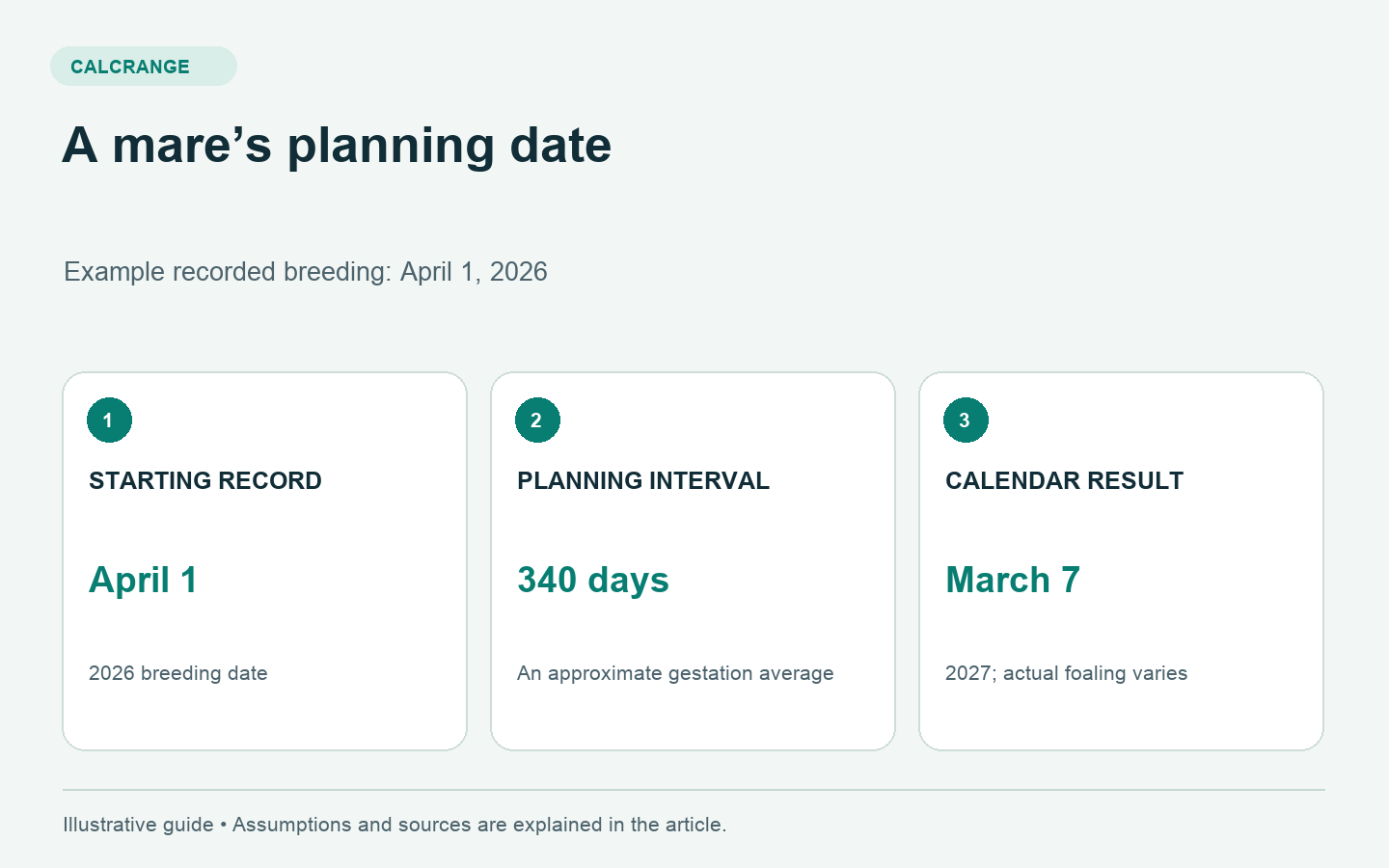
The Horse Gestation Calculator turns a recorded breeding date into a planning date. Before using it, check the record: the last observed mating, an insemination and a veterinarian-determined ovulation date should be labeled accurately.
What the 340-day estimate means
The approximately 340-day figure appears in AAEP reproductive proceedings. It describes a typical duration for planning. It does not establish the maturity of a particular foal or a date on which birth should be induced.
That distinction matters when a date passes without foaling. A calculator cannot determine whether the starting date was correct, assess fetal development or judge the mare’s condition. Ask the veterinarian how to interpret the dates in the context of her examination and history.
Worked example: April 1 breeding
For a recorded breeding date of April 1, 2026, add 340 elapsed days. The result is March 7, 2027. Adding 11 calendar months instead produces March 1, six days earlier.
The difference is purely calendar arithmetic: 11 months is not a fixed number of days. For a consistent record, write “April 1, 2026 + 340 days = March 7, 2027.” If your veterinarian uses a different interval or a more precise starting date, record that assumption separately.
| Record | Example |
|---|---|
| Recorded event | Breeding on April 1, 2026 |
| Calculation assumption | 340 elapsed days |
| Planning date | March 7, 2027 |
| Pregnancy confirmation | Separate veterinary record |
| Actual foaling date | Complete after birth |
Keep the evidence behind the date
A useful record includes mare identification, breeding dates, service type, any known ovulation timing and veterinary examinations. Keep earlier estimates when an examination produces a revision. Otherwise, it becomes impossible to tell later whether a different foaling date reflects changed dating information.
AAEP terminology guidance distinguishes a veterinary diagnosis of pregnancy from an assumption based on breeding. Its reporting guidance calls for the diagnostic method and approximate gestational length, when known. Following that distinction in your own notes makes the calculator result easier to interpret.
Plan the handover before foaling season
Write an observation rota, the primary veterinarian’s number, emergency transport arrangements and the location of relevant records. Give anyone covering the mare access to the latest veterinary instructions. A screenshot of a due date alone does not explain when the estimate was made or what it was based on.
Merck Veterinary Manual describes changes such as udder development and waxing before foaling, while cautioning that pre-foaling signs do not predict delivery precisely. Some signs may be absent or appear well before birth. Treat observations as information to discuss with the veterinary team, not as a countdown with guaranteed hours remaining.
Know the limits of a calendar
The calculator does not examine the mare, assess the foal or provide instructions for managing labor. A concerning observation or difficult delivery calls for veterinary assessment regardless of whether the estimated date is near. Medication, induction and emergency procedures are outside the scope of a date tool.
After birth, add the actual foaling date to the record. You can then calculate the elapsed days from each documented starting event and review the result with the veterinarian. Preserve uncertainty where it remains; a mating record is not automatically a known conception time.
Use the displayed estimate to make preparation visible and reviewable. The practical goal is that everyone caring for the mare knows the expected period, the evidence behind it and who to contact when the animal’s condition requires attention.
Sources and method
Sources checked September 18, 2026. Numerical examples are illustrative calculations, not patient or animal records.