

How to Calculate Water Tank Capacity
Tank capacity is just volume in litres. The formulas for rectangular and cylindrical tanks, worked examples, and the internal-measurement rule people miss.
Plan material quantities with clear measurement examples for concrete, paint, area, and volume. Try the concrete calculator, paint calculator, or area calculator. Check site conditions, product coverage, and supplier guidance when placing an order.
Tank capacity is just volume in litres. The formulas for rectangular and cylindrical tanks, worked examples, and the internal-measurement rule people miss.

1 square metre is 10.764 square feet, not 3.281. The conversion factors both ways, a quick table, and why you square the number, with worked examples.

Two coats is the honest default for most walls. When one coat is enough, when you need three, and how primer and colour changes affect the count.
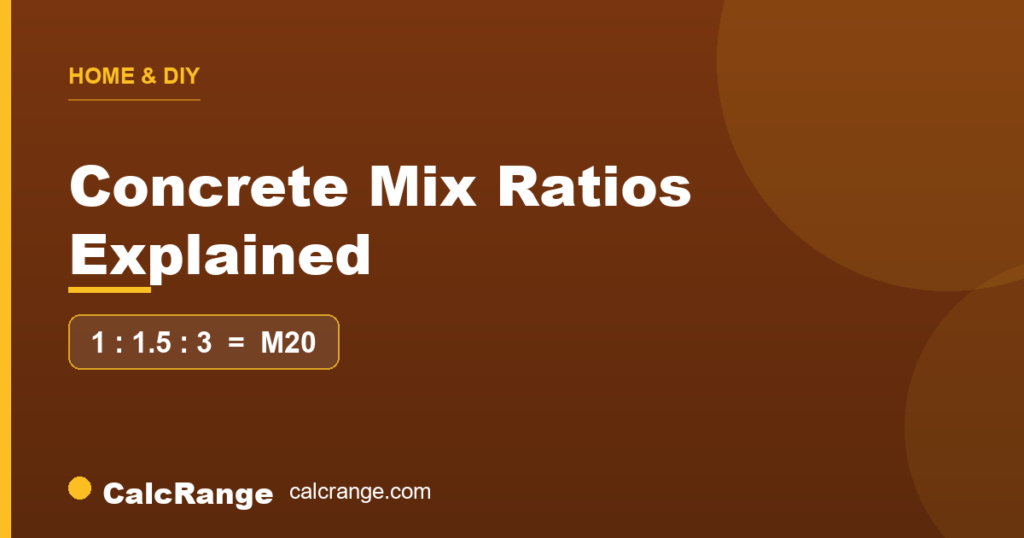
What 1:2:4, M15, and M20 mean, how mix ratios map to strength grades, the water-cement ratio, and how many cement bags each ratio needs per cubic metre.
How much wallpaper do you need? Divide total wall area by about 5 square metres per roll and round up. Covers the drop method and pattern repeat.
How much mulch do you need? Multiply bed area by depth for cubic feet, divide by 27 for cubic yards. Worked example, depths, and a coverage rule.
How much flooring do you need? Find the room area, add 10% for waste, and divide by the coverage per box. Includes a worked example and waste guidance.
How to calculate square footage: multiply length by width in feet. A 12 by 10 room is 120 sq ft. Covers whole houses, L-shaped rooms, and conversions.
The volume calculation, the waste allowance people forget, and how to turn cubic metres into bags of cement, sand and aggregate.
Wall area divided by coverage, times two coats. The measuring method, and the surfaces that quietly drink a third more paint.